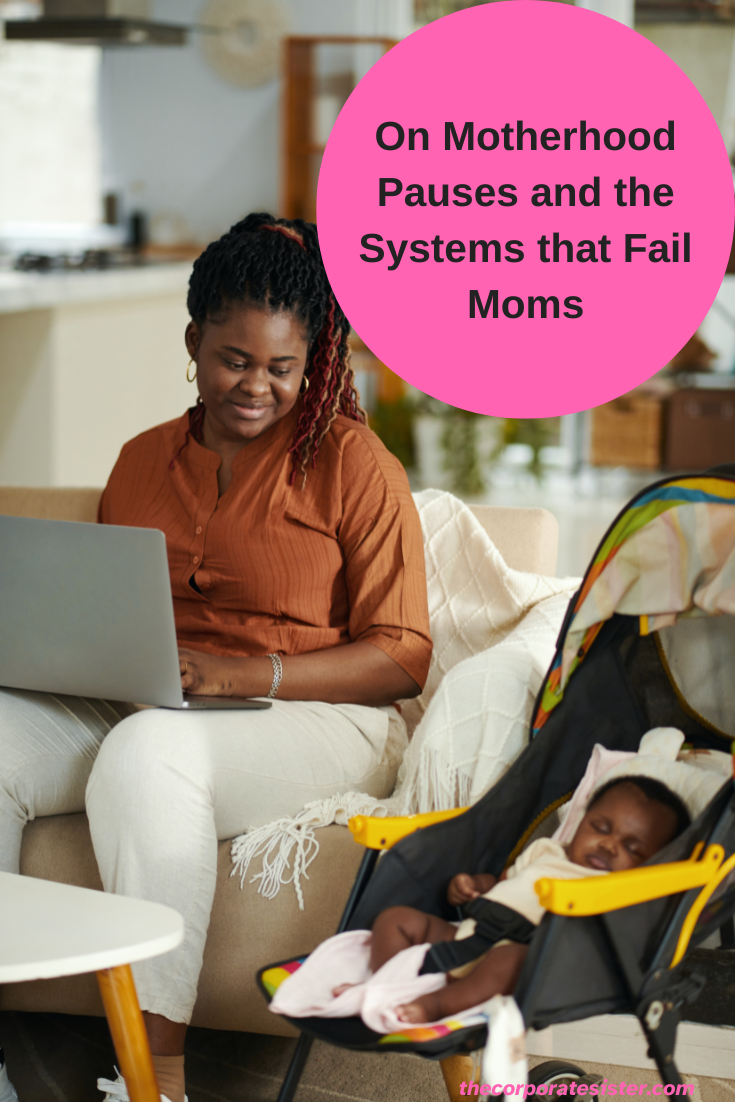
Career pauses are often framed as individual, deliberate decisions. For mothers, these pauses, whether due to childbirth, caregiving, or forced because of exorbitant childcare costs, tend to be seen as simply “opting out” when work and family’s demands collide. But the real question is: “Are mothers “opting out” of a system engineered without mothers in mind, or are they being pushed out by the sheer impossibility of thriving in a system that quietly relies on women’s unpaid labor while refusing to support it?” We’d agree on the latter…
Now more than ever, motherhood sits at the crossroads of invisible labor, gendered assumptions, and outdated systemic frameworks. As our work systems were never built to account for caregiving, invisible labor and the related systemic inadequacies, any pause a woman takes is treated as an exception. Yet, it is the inescapable rule for millions of women worldwide.
The reality is: The pause is not the problem.The system forcing the pause is.
Research continues to confirm what mothers already know:
When mothers step back from paid work, the system labels it a decline, or even worse, a loss in productivity. In reality, it is but a labor transfer. Mothers absorb the caregiving required to keep families, communities, and economies functioning. The economy depends on this brave, invisible and unpaid labor. It simply refuses to assign the proper value to it.
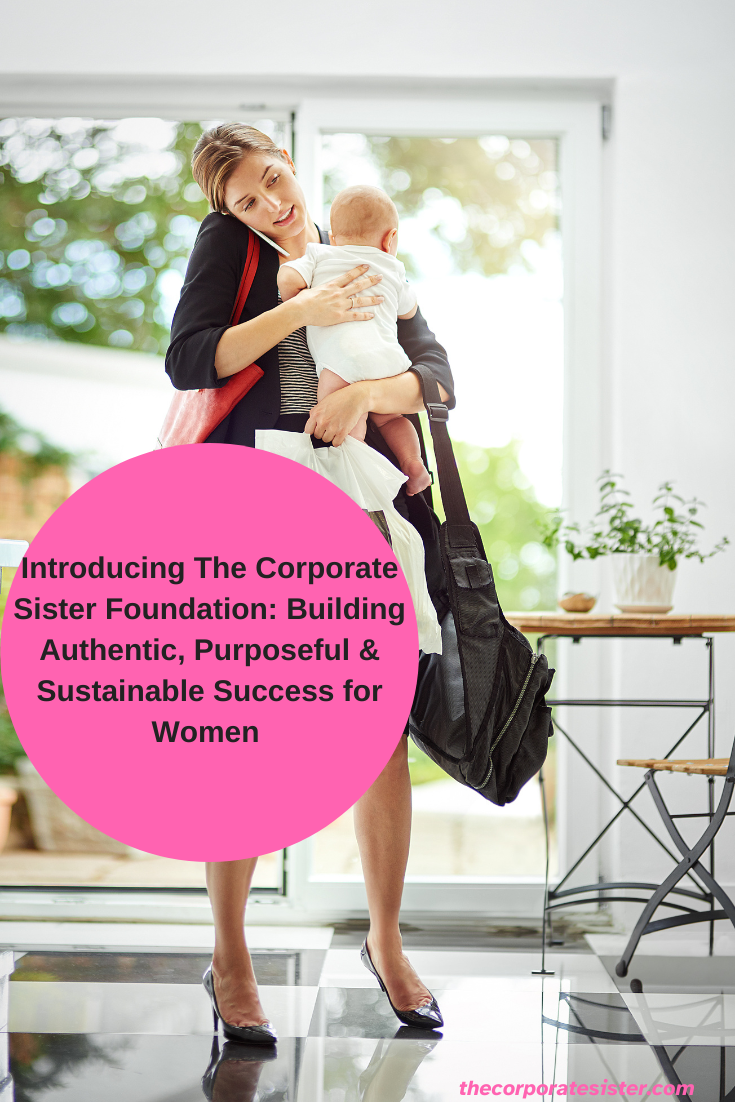
Despite this, mothers are still required to be show up fully at work and fully at home. To do it all, and hope to have it all. This impossible dual mandate is what drives burnout, exhaustion, financial losses, and the quietly loud grief of women who feel compelled to choose between their livelihood, their purpose, and their loved ones. Add to it the shame that surrounds career pauses for women, and you get a uniquely manufactured breeding ground for harmful gendered biases and stereotypes of all kinds…
RE-IMAGINING NEW SYSTEMS OF WORK
If we want healthy workplaces that truly work for mothers, we must be willing to re-imagine systems of work that:
– Recognize caregiving as essential economic infrastructure
– Guarantee paid family leave
– Normalize flexible and hybrid work
– Remove bias from performance evaluations
–Treat nonlinear careers as a strength, not a risk
–View career pauses as data, not deficits
Motherhood is not a break in ambition. It is a different form of work—demanding, strategic, and deeply valuable. And it deserves systems worthy of its weight.
When I first launched The Corporate Sister years ago, it was just a small blog — a space where I could share my journey as a woman navigating the corporate world, motherhood, and purpose. What I didn’t realize then was that I was starting a movement — one rooted in sisterhood, truth, and transformation.
Over the years, the conversations on this platform have evolved. Women have shared their challenges, their triumphs, and their hopes. One theme kept coming up again and again — the desire not just for inspiration, but for infrastructure: a real, supportive system that helps women thrive in their work, their wealth, and their lives.
That’s why I founded The Corporate Sister Foundation — a not-for-profit organization dedicated to helping working women and mothers build sustainable careers and lives through community, education, and empowerment.
Why We Created The Corporate Sister Foundation
The truth is, the world of work was not designed with women in mind. For decades, women have been adapting, stretching, and pushing against systems never meant to support them.
But the tides are shifting. We’re in a moment where women are not just participating in the workforce — we’re redesigning it.
The Corporate Sister Foundation exists to turn that redesign into reality. We’re here to make work — and life — sustainable for women. Not just in words, but in systems, tools, and sisterhood.
Our Mission: Building Sustainable Careers, Wealth, and Legacies
At the Foundation, our mission is simple but powerful: To help women build sustainable careers and lives that align with their purpose, potential, and peace.
We do this through three core pillars:
1. Career: Helping women design fulfilling, purpose-aligned careers — not just chase titles.
2. Motherhood: Supporting working mothers as they balance ambition, care, and rest without guilt.
3. Finance: Empowering women to build financial independence and generational wealth through practical education and mindset work.
4.Faith: Grounding women in the truth of their faith and spiritual growth.
Because women shouldn’t have to choose between their success and their sanity.
Our Vision: From Conversation to Action
The Corporate Sister Foundation is more than a vision — it’s a movement. We’re building programs that meet women where they are, whether that’s climbing the corporate ladder, launching a business, or redefining their work-life balance.
Here’s a glimpse of what’s coming:
• The Sister Career Circle — A monthly virtual space where women can connect, reflect, and grow together.
• The Feminine Finance Lab — Interactive workshops teaching financial wellness and wealth-building from a woman’s perspective.
• The Working Mom Reset Series — Tools and sessions to help mothers rediscover balance, purpose, and rest.
Each of these initiatives is designed to help women thrive — not just survive — in the modern world of work.
What We’re Trying to Accomplish
At its heart, The Corporate Sister Foundation is about creating sustainable success — the kind that doesn’t come at the expense of our health, our families, or our peace.
We want to see a world where women:
• Build careers aligned with their values. • Thrive as professionals and mothers without apology. • Take control of their finances and create generational wealth. • Feel supported, seen, and empowered — not burned out and isolated.
We’re creating a new blueprint for women’s work — one rooted in purpose, equity and community.
How You Can Join Us
If you believe, as we do, that the future of work should work for women, there are many ways to get involved:
• Subscribe to The Sister Brief — our weekly newsletter for career, motherhood, and finance inspiration.
• How Can You Join Us?
1️⃣ Become a Founding Supporter: Your support—big or small—will fuel our mission. You can donate HERE !
2️⃣ Join Our Community: Be part of our new volunteer programs, mentorship initiatives, and leadership circles. CLICK HERE TO JOIN THE WAITLIST!
3️⃣ Share the News: Forward this post o a friend or colleague who believes in empowering women.
A Final Word
This new chapter of The Corporate Sister is more than an expansion — it’s a calling. It’s about turning years of conversation, struggle, and triumph into something tangible that can truly change lives.
Because when women support each other, careers flourish — and so do lives.
Welcome to The Corporate Sister Foundation. Welcome to sustainable success — built in sisterhood.
This short but powerful episode introduces the next step in The Corporate Sister journey. It is The Corporate Sister Foundation, the not-for-profit organization created to help women build sustainable careers, wealth, and legacies.
The episode recounts the story behind The Corporate Sister Foundation’s creation, its core mission, and the transformative programs it will launch to support working women and mothers in redesigning work that truly works for them.
Listeners will discover how the Corporate Sister Foundation will provide real resources and how they can join, partner, or donate to advance the movement for women’s sustainable success.
Key takeaway: The future of work should work for women — and The Corporate Sister Foundation is building that future, one sister at a time.
Thanks for Listening!
Thanks so much for tuning in and listening to this week’s episode! If you enjoyed this week’s episode, please share it by using the social media at the bottom of this post!
Also, leave me a review for the TCS podcast on Apple Podcasts !
Building a sustainable career as a woman in a professional world built for men is not for the faint of heart. Building a sustainable career in unsustainable times is an even greater feat. Women today face a myriad of pressures, from burnout to flexibility loss, childcare and financial strain, not to mention career inequality, cultural and political pressures, as well as mental and emotional burdens.
If you’ve been questioning the sustainability of your career, especially during these turbulent modern times, you are not alone. Nearly half a million women have exited the U.S. workforce, with larger numbers among working mothers of young children, as driven by outrageous childcare costs, reduced workplace flexibility, and increased gender bias.
Yet, there is hope…
Hope in Unsustainable Times
History has proven that periods of instability have often sparked feminine revolutions that reshaped workplaces, communities, and even entire economies. From the French revolution and the Women’s march on Versailles, to the women’s suffrage and rights movements in the U.S. and recent global feminist movements, revolutionary times have testified to women’s capacity to drive major cultural, economic and political shifts. This moment is no different.
However unstable the times we’re living in, they also present a rare opportunity for women to redefine what a successful and sustainable career is. Now more than ever, women have the opportunity to tap into their deepest reservoirs of innovation, resilience, and genius to birth a new model of career and work — one that authentically aligns with their purpose, process and essence, not just the systems they inherited.
Here are three steps that can help provide a framework to build a sustainable career during unsustainable times:
1. Know Thyself
This ancient maxim has not only survived the test of time — it continues to define the women who do the same. When it comes to career sustainability, self-awareness is key. It extends beyond understanding our gifts and talents to include an honest assessment of weaknesses, technical expertise, and managerial competencies.
How well do you understand the tools shaping and transforming your industry — from AI to finance? How effectively do you collaborate, manage others, or design systems that work? Knowing where you stand on the spectrum of personal, technical, and managerial competencies allows you to understand your current stage of evolution and needs for growth.
As women, self-knowledge runs even deeper. It’s not only about who we are in our work, but who we are across the seasons of our lives. Our careers ebb and flow alongside life events — marriage, motherhood, the highs and lows of relationships, perimenopause, menopause, health changes, and personal reinvention. To build sustainably, we must understand how these phases intersect with our professional paths and adjust accordingly. At every stage — whether we’re just starting out, in mid-career reinvention, or giving back after years of experience — self-knowledge helps us discern not only what our careers demand of us, but what they must give us in return.
A sustainable career is not a one-way transaction. It’s a dialogue — a give and take between who we are becoming and what our work allows us to become.
2. Learn, Adapt, and Leverage Change
Knowing yourself is not enough. The next step is to invest in continuously evolving.
Yes, AI and automation are reshaping industries and eliminating some roles — but they are also opening unprecedented doors for women. Technology is freeing women from repetitive, undervalued tasks and inviting us into deeper, more creative work that requires strategy, empathy, and critical thought — all areas where women naturally excel.
Sustainability, in this context, means staying adaptable. It means continuously learning, leveraging your unique perspective, and positioning yourself where human creativity and insight matter most. When women use the tools of disruption — rather than fear them — we reclaim control over the narrative of work.
How are you staying adaptable in your industry, field, business? How are you leveraging your creativity and unique insights to differentiate and position yourself professionally?
3. Become a Creator of Knowledge
Sustainable careers are not built on consumption alone — they’re built on creation.Women who thrive in turbulent times are not just learners; they are makers — of ideas, systems, tools, and solutions. We can’t afford to be passive recipients of information. We must transform what we learn into innovation, thought leadership, and tangible impact.
AI cannot replace that. It can replicate patterns, but not purpose. It can process data, but not drive meaning.
When women embrace their innate creativity — our instinct to nurture, design, and problem-solve — we move from being replaceable participants to irreplaceable innovators. In other words, we become future-proof.
4. Pay It Forward: Service As Career Fuel
Many of the most successful and sustainable careers have one aspect in common: service. Service is the fabric that ties together purpose and work. For most working and moms, it’s an innate part of career building and success. While giving back can occur throughout women’s entire careers, it tends to culminate during their later years, as part of the reinventive contribution phase occurring between 46 and 60 years of age, as defined based on Donald Super’s lifespan-linespace theory.
When women can fully repurpose their innate nurturing qualities into professional service, they are able to tap into a higher, more fulfilling dimension of work. When this service aligns with their purpose, it then has the potential to unleash a trickle-down effect of positive contributions paying it forward for other women.
Conclusion: Women as Architects of the Future of Work
By knowing yourself, continuously adapting to change, and positioning yourself as a creator rather than a consumer, you can not only sustain your career, but also and most importantly redefine what “career sustainability” means.
In these seemingly unsustainable times, you have a singular advantage. One that women have always had, and that is to know how to build something from nothing. Now is the time to channel this innate creativity into designing careers and systems that not only survive, but thrive the test of time.
How will you be building a sustainable career in unsustainable times?
At the end of every season of life and work as women and moms, we can find ourselves literally adrift, both professionally and personally. Somewhere amid the tension, the apprehension and anticipation, we end up in this random place between passively surfing the waves of the season’s transition and keeping ourselves from desperately drowning in the riptide created by it…Often, this also signals a time of reinvention.
For women, reinvention in general, and career reinvention in particular, is a familiar, albeit often silenced, necessity. Women’s personal and professional journeys are seldom linear; but rather always marked with detours, bends, pauses and new beginnings of all kinds. From stepping into motherhood to journeying through menopause, through shifting careers and life seasons, women’s work constantly demands reinvention.
While the theory originally applied to men’s careers, some key elements can be applied to women’s careers. These include the self-concept, or the notion that career choice results from an individual’s evolving values, perceived abilities, and interests. This is especially relevant to women, whose identity keeps evolving over time, from youth to marriage, motherhood, menopause, and everything in between. The life-space concept, which places an individual’s career as part of their life space, is also reflective of women balancing multiple, interconnected roles in their lives and work. Career adaptability is another concept reflecting the many career transitions, changes and interruptions occurring in women’s careers. Finally, the concept of “recycling” lends itself to women’s non-linear career paths, including employment gaps and breaks.
As such, research based on Super’s theory has identified three phases in women’s careers:
The idealistic achievement phase (ages 24 to 35) marked by early career ambition and the desire for achievement and success.
The pragmatic endurance phase (ages 36 to 45) during which women balance multiple responsibilities and demands from work, home as well as the community;
The reinventive contribution phase (ages 46 to 60), marked by a focus to contribute though work, family and community.
Understanding these seasons is crucial to promoting women’s career success, while caring for their well-being through the different phases of their lives. And this is especially relevant in the tumultuous times we’re living in, as women’s careers face persisting barriers and obstacles.
THE CURRENT CONTEXT WE LIVE IN
In 2025 alone, 212,000 women, ages 20 and over, have already left the workforce, according to the Bureau of Labor Statistics. This is in stark contrast to statistics revealing the entry of 44,000 men in the workforce since January 2025. As a result, women’s labor force participation rate has dropped from 69.7% to 66.9% between January and June 2025. This decrease coincides with the recent rollback of flexible and remote work policies negatively impacting mothers and caregivers, as the Flex Index reports an 11% jump in Fortune 500 companies’ full-time office requirements in Q4 2024. Yet, post-COVID19 research shows return-to-office policies actually hurt productivity, innovation and competitiveness.
Now more than ever, especially in our current political, economic, and social contexts, it is crucial to understand the intricacies of women’s careers.
REINVENTING WOMEN’S CAREERS
So how can women reinvent their careers through the various seasons of their lives and work, especially in the transitional times we’re living in?
Here are three questions that can help in the process:
What season of life and work am I in?
Knowing what season of life and work we are in can go a long way toward devising an appropriate strategy to reinvent ourselves as women. What worked at the beginning of our careers will not work after kids, or through midlife. To each season, its needs, requirements and specificities. Beyond women’s career phases (idealistic achievement, pragmatic endurance, and reinventive contribution phases), there are also seasons that are unique to each and every woman, both personally and professionally. Being able to identify these and be aware of how they impact us, what they demand of us, and how best we can tackle them, is key.
What do I need in this season?
Putting our masks on first as women in and outside of work is not an indulgence, but a necessity. Too many women burn out under the constant pressure of prioritizing others before themselves, risking their health, sanity and the very contributions they bring to society. This is where asking ourselves what we need in the particular season of life we’re in becomes crucial.
Some seasons require more support than others. Certain phases of life and work demand different sets of skills, and entirely different mindsets and ideas. Taking a reflective stance to literally putting our masks on first is indispensable to becoming the version of ourselves we need in the moment.
What are the systemic, structural and organizational opportunities and barriers that I am facing and how can I leverage them?
To blind ourselves to the fact that there are no external factors affecting us in and outside of the workplace is to proverbially bury our heads in the sand. While much of the feminist propaganda of our times has urged women to literally change themselves to “succeed”, the reality is, little has been done to address the biggest change factors out there. These include the systemic, structural and organizational barriers women face day in and day out, from gender discrimination to sexism and overarching patriarchy. The systemic, organizational and structural systems of power that keep setting women back not only do exist, but they are also perpetuated by the misplaced focus on women”s perceived weaknesses or inabilities.
Understanding what these barriers are, as well as what opportunities exist to counteract them, is key to re-imagine how women can thrive in authentic and purposeful careers.
IN CONCLUSION
Somewhere between surfing the waves of the season’s transition and keeping ourselves from desperately drowning in the riptide created by it, there is a middle ground after all. That of understanding that unlike the traditionally masculine stereotype of linear careers, women’s careers are affected by different seasons and phases. They also require different paradigms, models and systems than the ones we’ve been accustomed to for centuries. Only when we understand, accept and implement these, can we begin reinventing women’s careers for the better…