by Solange Lopes | Feb 6, 2018 | Working Mom & Woman Tips |
Earlier today, I picked up my son from school. As soon as he jumped in the car, he started telling me about a discussion they had in class about racial segregation in the US, and how “the white people and the black people drinking from different bubblers”. I understood his class discussion was related to Black History Month. As he was recounting the story in his 6-year old’s words, I couldn’t help but getting nervous at the prospect of having to explain what Black History Month is really about.
With all the positive and negative events that have occurred in our society, from racial tragedies to movements igniting change such as #BlackLivesMatter, #MeToo, #TimesUp and the #WomensMarch, it’s more important than ever for everyone to learn our history. This is especially crucial for kids as they are growing up in a society that is ever-changing.
It took me some time as a parent to come to terms with how to properly explain what Black History really means to my kids. The last thing I wanted was for them to grasp a sense of being different, or to build walls with others. It was important for me convey that as important as history is, it is to be used as a learning experience to make the present and future better.

Here are a few ways to explain and share Black History with kids, minus the uncomfortable conversations and hushed tones:
-
Explain with compassion
Black History Month is about celebrating the achievements of African-American men and women throughout history. Teaching kids about the contributions of the African-American culture to modern society, and having compassion as you share the unfortunate events of the past, such as slavery and segregation, is key.
-
Teach them through books
There are many available books sharing black history, from slavery to the civil rights movement. You can find these at the local bookstore or library. Here are some suggestions to get you started:
-
Let them taste it
How about teaching about Black History Month through their taste buds? You may want to cook up a pot of southern style collard greens, or take them to a restaurant specializing in African American heritage food.
-
Have them experience the artistic side of it
There are many art events, both local and non-local, during Black History Month. Research performances at your local library, schools, or community centers, so your kids can experience the arts part as well.
-
Build a family tree
A fun project for the kids to teach them about black history is to build a family tree. It may involve some research but will keep the kids engaged and learning.
-
Visit historical places
Have you considered visiting African Heritage museums, or historical places that can be used as learning moments for the kids. Do some research to locate these places in and outside of town.
-
Talk to elderly relatives and friends
Do you have access to elderly relatives and friends that your kids can talk to and learn from as related to Black history? Create a connection between the different generations so they can learn from each other.
What other tips do you have to teach kids about Black History?
To Your Success,
The Corporate Sis.
*Please note this post contains affiliate links, and I may be compensated if you make a purchase through some of these links.

by Solange Lopes | Feb 6, 2018 | Career |
You know that feeling that overtakes you every time you’re getting close to achieving a goal or objective? That sudden need to procrastinate, the urge to collect all possible negative thoughts about yourself and whatever project you’re working on at the moment? These are all signs that you’re about to sabotage yourself.
Many, if not most of our goals in life, career or business, get unfinished because we tend to sabotage ourselves in the process. We may set the most effective, realistic and functional goals, and still come up short. This is not for lack of skill, motivation or even aptitude. It’s simply because of self-destructive behaviors that keep us from taking action towards our goals and dreams.
I’ve struggled with procrastination quite a bit because I couldn’t recognize the self-sabotage behind my sudden drops in motivation and drive. It took me a while to recognize that one of the hardest battles I would have to wage would be against my own self, to stop destroying my own efforts. For many of us, it stems from a fear to succeed, which is often stronger than the fear of failure.

Here are a few ways to cut to the chase and stop sabotaging yourself in life and at work:
-
START with understanding your self-sabotage patterns
Everyone has different patterns in life and at work. Often, we fail to recognize when we’re self-sabotaging, because it feels comfortable and routine to do so. For most of us, there are specific areas in which we often unconsciously ruin our own efforts.
Review the different areas of your life and work, and start identifying the ones in which you’re practicing self-sabotage. It may be in your finances, career, relationships or health. The fact that you’re sabotaging yourself in any of these areas means that you may be struggling with some form of anger, shame, or sense of not being worthy enough.
Interestingly enough, as much as I love writing, I realized that the fear of failure would paralyze my writing efforts and make me less productive. It became clear that I was scared of being rejected, or looking ridicule because of my writing. It was only when I could face this truth about myself that I was able to fight my negative patterns and progress in my writing.
-
STOP delaying
One of the most prevalent effects of self-sabotage is constant delaying. You may find that you put off tasks to the next day, and let negative thoughts paralyze you into inaction. For instance, procrastinating before an important meeting, or leaving a crucial assignment to the last minute, is a clear sign of self-sabotage.
Instead, consider tackling your to-do’s as soon as you can, instead of postponing them to a later time. The more you impose this to yourself, despite the negative thoughts and patterns you may be subject to, the more you will fight your tendency to self-sabotage.
-
START facing your feelings
For many of us, facing the feelings of unworthiness, shame or anger that lead us to self-sabotage is a no-no. Instead, we tend to suppress them, pretending they don’t exist. As a result, our negative and self-destructing behaviors continue, ruining our best efforts in the process.
It takes a lot of courage to admit to oneself our fears and failures. However, it’s the only way to address them and fight them successfully. I had to admit to myself, and others around me, that I was afraid to be ridiculed because of my love for writing, or for being an introvert. Yet, the minute I could face these fears, I was free to recognize and address these demons. Once you know your areas of improvement, no one can hold them against you.
-
STOP dwelling on the past
So many of us are still prisoners of our past, especially when we feel like we’ve failed or haven’t measured up to some ideal we had for ourselves. Instead of focusing on the present, we stay in “If only” land, playing and replaying failed scenarios.
You can’t start over with a clean slate if you keep replaying the past. You have to be able to move on, and make peace with whatever has happened. A great trick is to write yourself a letter in which you forgive yourself for any and everything you’re still holding against yourself, or others. And move on, once and for all..
-
START journaling
Journaling is a powerful way to spot those instances when your mind start bullying you and you fall into the self-sabotage trap. I find that expressing my thoughts in a free and unrestrained way, allows me to free myself of the mental and emotional baggage we all carry.
Just remember there are no rules to journaling. You can write freely and express yourself unabashedly. While it may be intimidating at first, it will help you release some of the negative thoughts and emotions you may be feeling. You’ll start seeing more clearly where your blocks are, so you can address them better.
-
STOP comparing yourself to others
Comparison is really the thief of joy. It’s also one of the biggest ways in which we sabotage ourselves. Instead of being motivated to do better, we tend to feel unworthy or inadequate. By comparing, you limit your own beauty, effectiveness and potential.
Identify those areas in which you tend to compare yourself with others, and face them head on. If social media or certain relationships trigger you to compare yourself to others and feel less than, consider distancing yourself from them. Focus on YOU and the unique gifts and abilities YOU have been given.
-
START speaking kindly to yourself
Faith comes by hearing. It also means that what you say to yourself, you tend to believe. Start speaking more kindly to yourself, and honoring the positive about you, instead of emphasizing the negative.
Start observing how you talk to yourself, whether through your own mental chatter or through the words you use about yourself. You’ll start noticing how unloving you can be towards yourself. We all are. Begin to consciously turn negative thoughts and words into more positive chatter, and watch the difference.
How do you stop self-sabotage in your life and work?
To Your Success,
The Corporate Sis.

by Solange Lopes | Feb 5, 2018 | Career |
While we celebrate Black History Month all year long, the month of February reminds us of the role of African-Americans in history. Part of it is also to recognize the outstanding role that Black women have, and still do, play through their fight against adversity and bias. It’s their resilience and power through history that reminds us of our own power and gives us the inspiration to keep pushing.
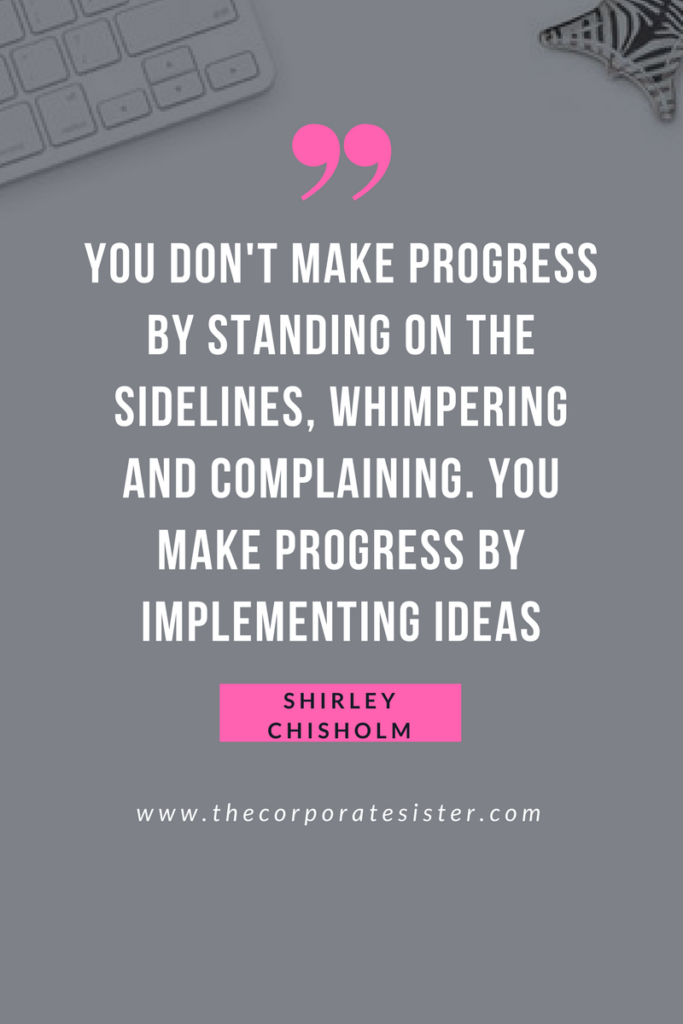
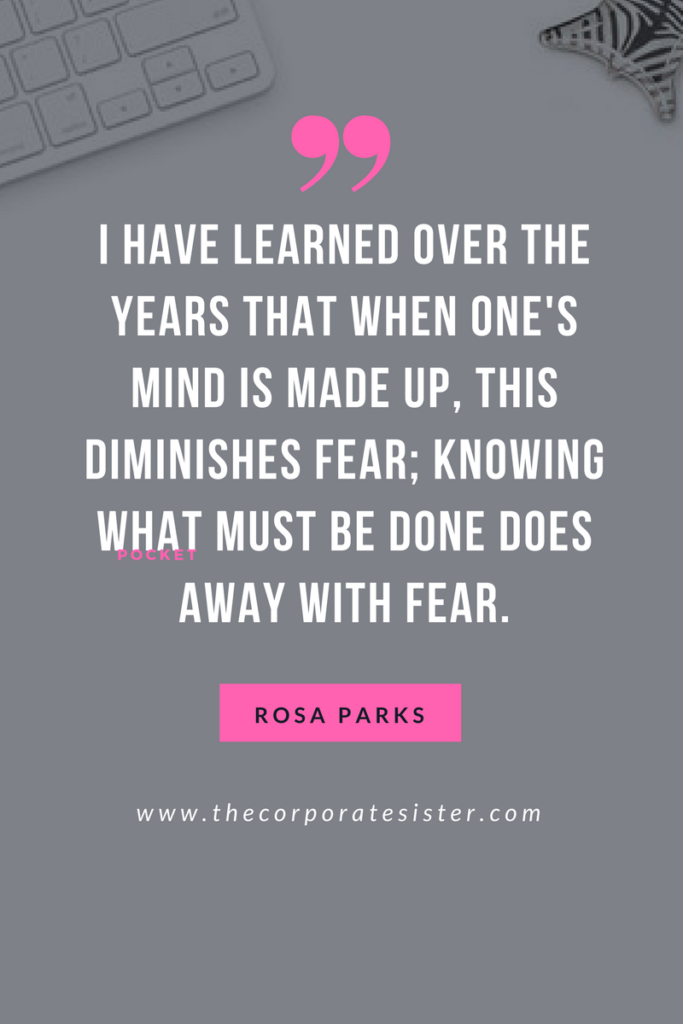
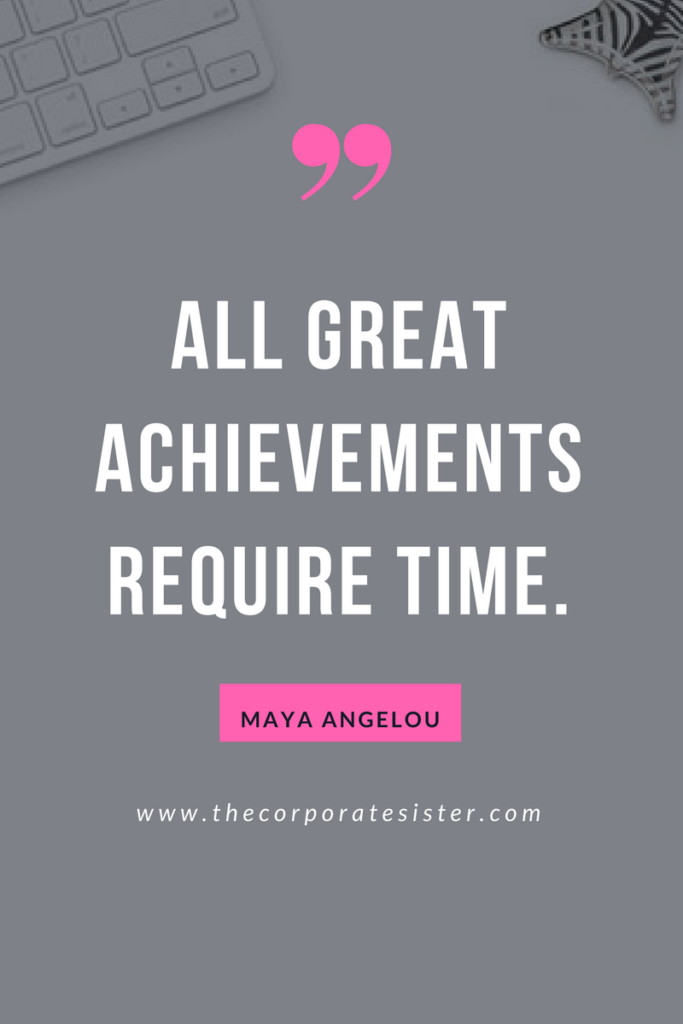
As we celebrate Black History every day, here are 13 inspirational quotes from pioneer Black women to keep us motivated:


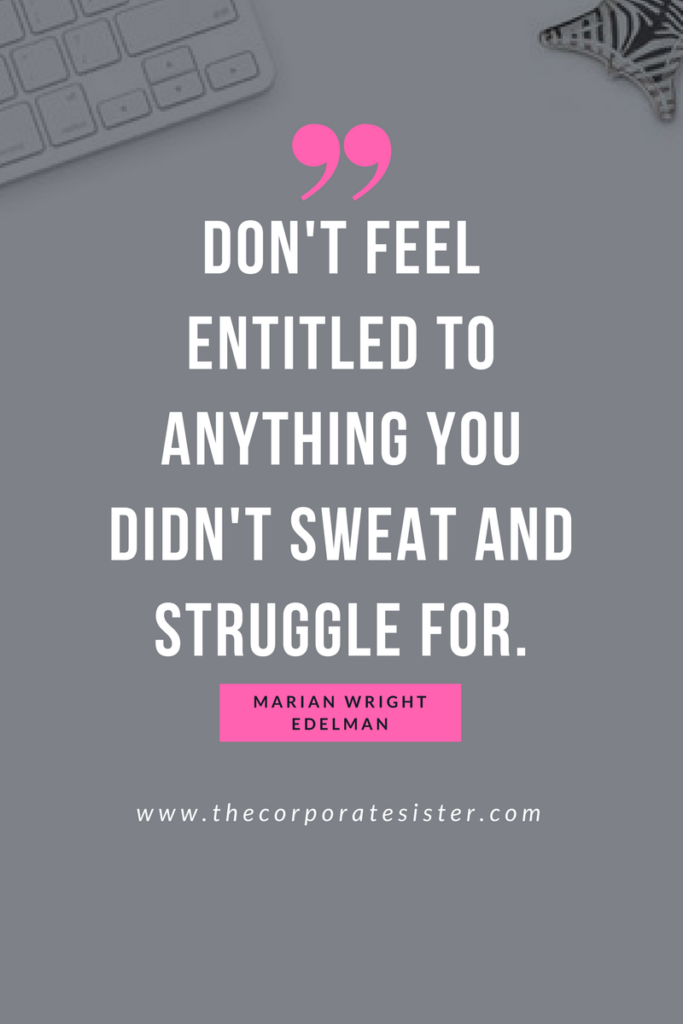




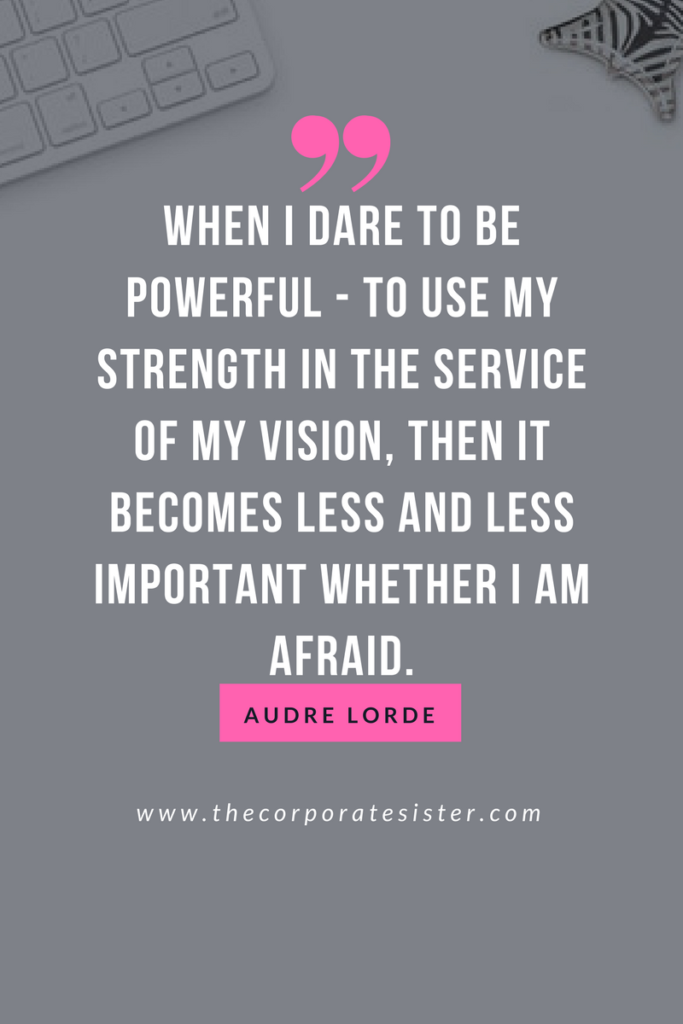
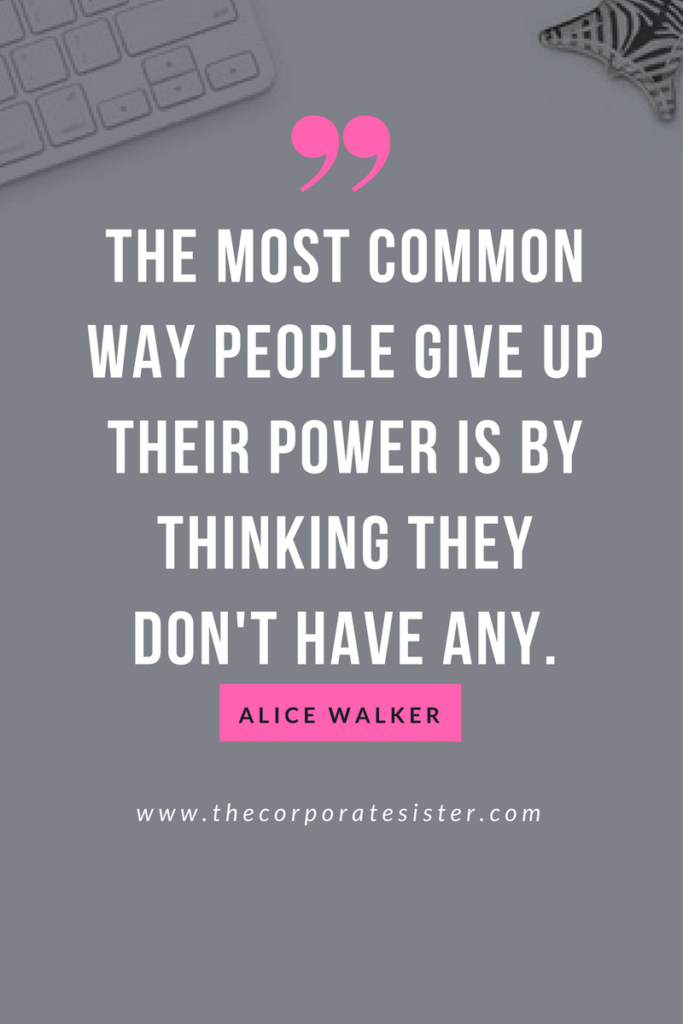
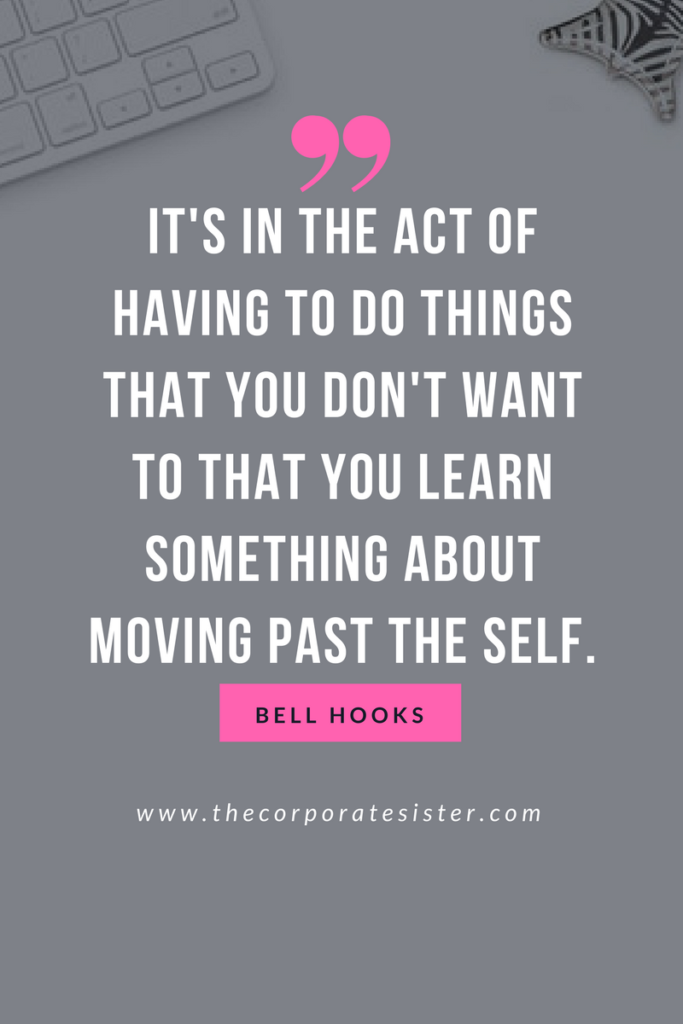
What are your favorite quotes by Black women?
To Your Success,
The Corporate SIs.

by Solange Lopes | Feb 5, 2018 | Working Mom & Woman Tips |
The other day, my son asked me to play cards with him as I was in the middle of finishing some client work. Exasperated, I asked him to give me another five minutes so “Mommy could finish working”. At this point, it had been about ten series of five-minutes I had requested from him, complete with sighs on my part and mini tantrums on his. Yet this time, instead of throwing yet another mini-tantrum, he simply turned around and said to me: “You never want to play with me”…
As I watched his little frame slowly turn around, an unusually sharp pain pierced my mom’s heart. Kids have this uncanny ability to speak truth in all circumstances, and this time again, he was right. My schedule had been unusually charged, between both kids, school, home and life in general. Like so many other working moms, I was trying to balance my work and my life, to juggle it all, to be all I could be…

As working moms, it’s easy to fall into the trap of thinking we can balance it all. It’s tempting to buy into the notion that we can have it all, attempting to balance the large plate of our personal and professional obligations on our already over-extended shoulders. What we don’t often realize is that we cannot do it all, and neither should we. When I’m working on a project, I’m not available to my family, and vice-versa. There are also times when my family life takes over, and I spend less time at work. At other times, I may work overtime to meet a work deadline, and have less personal time. All of this makes work-life balance quite elusive at best, if not unattainable; which makes work-life integration not only much needed, but painfully necessary…
Your work is part of your life. In the same way, whether you like it or not, you do bring the effects of your lifestyle with you to work. While they may not be readily perceptible, they still impact the way you work and how productive you end up being. This is not about using your every waking hour to fit in work and other commitments. Neither is it about being available at all times, and jumping from one task to the other in an effort to be unrealistically flexible. It’s about de-compartmentalizing our lives and careers to create more fluidity between work and life. The point of work-life integration is to soften, not harden, our approach to how we work and live.
In my experience, I’ve found that having the flexibility to integrate work and life, in a healthy manner, allows me to be more present as a mom, wife, and woman. Don’t get me wrong. This doesn’t mean working at all hours of night or having my phone constantly on. What it means for me is that I’m able to work from home when my child is sick. It also means that I can take advantage of the kids napping to sneak in an email or two; or that I can leverage my peak productivity hours instead of strictly relying on an imposed work schedule.
Here is how we can all integrate our work and life as working moms, instead of spinning our wheels on a constant search for an elusive work-life balance:
-
Know yourself and your circumstances
It all starts with understanding what works for you and your particular circumstances. This means understanding how you work best, what your family and environment needs are, and how you are best fulfilled. This will help you determine how best to integrate your work and life, and make it work for you and your entire family.
Many moms have no other choice than to work around their kids’ schedule. For this reason, many end up sacrificing their careers and personal fulfillment. This can be avoided by finding the right formula to meet work and family obligations in a healthy and productive manner.
-
Build a work-life integration strategy
Along with understanding what works best for you as a working mom in terms of work and personal arrangements, t’s important to build an effective integration strategy. This includes setting a schedule of priorities for yourself and your family, and sticking to it.
For some, it may means having a specific daily focus, to maximize the available time at their disposal. For others, it may mean working non-traditional hours to prioritize their family care during the day. Ask yourself what strategy will work best for you, and be open to experimenting as you go along.
-
Focus on being present
Work-life integration is not about doing more and fitting in as much as you can during the day. Rather, it’s about softening the mental and physical barriers between work and life, so we can be more present.
Instead of being stressed out at work because you’re not able to pick up your sick child at school, you can have the peace of mind to care for him or her. Rather than being distracted while spending time with your family by work concerns, you can actually be more present.
-
Prioritize your happiness and well-being
The most important aspect of work-life integration is to be happy and fulfilled. It’s to move with fluidity through life and work, and not be compelled to make unnecessary drastic and difficult choices. How many working moms have to sacrifice their family in order to be successful professionally? How many others are sitting at home, unable to focus on their family, because of a broken career or business dream?
In order to show up well at home or at work, you must be fulfilled and happy. If that means having a non-traditional schedule to be present with your loved ones, then so be it. If that also means relying on a spouse’s support while we climb the corporate ladder or build your dream business, then so be it as well.
-
Be open to change
Integrating work and life also means allowing a certain sense of flexibility in. Being open to change, whether professionally or personally, is the key to finding the right formula for you and your family.
No two careers or lives are alike, which implies that what may work for you may be a total disaster for me. By welcoming change and the possibility of experimenting with various ways to integrate your work and life, you are able to find what success really looks like for you.
How do you integrate work and life as a working mom?
To Your Success,
The Corporate Sis.

by Solange Lopes | Feb 2, 2018 | Career
 Welcome to our weekly career, entrepreneurship, lifestyle and fashion news roundup! Think of it as your online watercooler/work gossip station/coffee break spot for now…Want to add anything to our list? Email us at corporate@thecorporatesister.com!
Here’s to your success!
The Corporate Sister