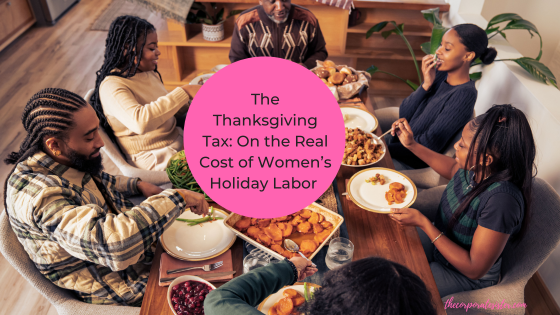
Every Thanksgiving and the ensuing holiday season, many, if not most, women step into an all-too familiar rhythm. It’s the rhythm of tireless planning, strategic coordinating, devoted caretaking, and organizing, smoothing, prepping, cooking, hosting, remembering, and anticipating everything that could possibly go wrong… Yet, somehow, despite all this extensive, yet invisible labor, the holiday narrative is still that the turkey “just cooks itself,” the décor “magically appears,” and family harmony “just happens.”
We trivialize it. We simplify it.
We even laugh about it.
We keep it moving,
As Thanksgiving opens the holiday season of invisible labor for women, one truth remains: While women’s labor makes so much of life possible, so little of it gets accounted for and much of it remains invisible.
The thing is, labor invisibility during the holidays doesn’t disappear when the leftovers do. It follows women right back into the workplace, into their paychecks, their opportunities, and ultimately, into their long-term financial wellbeing.
And this Thanksgiving, we’re putting a name on it. Or rather, we’re renaming it the Thanksgiving tax. And it’s a pretty thankless one at that…
The Thanksgiving Tax: High Labor, Low Reward
Every year, women absorb the Thanksgiving Tax, aka the cost of being the one who “just handles it.”
But this tax doesn’t limit itself to the dinner table. As women and moms, it also follows us in the office as we become:
The default coordinator.
The emotional buffer.
The team anchor.
The behind-the-scenes fixer.
The unofficial DEI counselor.
The mentor.
The stabilizer.
This is all high-output, low-return labor. But most importantly, it’s expensive labor, whose often extravagant cost chokes out the precious time and energy women can invest in work that actually builds income, visibility, and wealth.
Studies reveal women are disproportionately assigned and/or volunteer for non-promotable, low-visibility work, which reduces the time they can devote to high-impact projects that drive advancement. Research and large-scale corporate studies indicate that this imbalance is a key driver of gender gaps in promotion and leadership representation.
For women who are used to keeping everything together, it then becomes harder to step into spaces that elevate their earning potential.
Invisible Labor Creates a Wealth Gap Pipeline
Thanksgiving labor is often invisible. So is so much of women’s work at the office.
As invisible labor leads to fewer raises, slower promotions, and lesser leadership opportunities, these also later translate into lost retirement contributions and reduced Social Security benefits. Research shows when women take on intensive unpaid caregiving and household responsibilities, their labor force participation often falls and their cumulative earnings over their lifetimes decline.
In other words, invisible labor today becomes a visible wealth gap tomorrow.
When women are overloaded with tasks that don’t build leverage, their long-term financial futures suffer. Not because they lack the capacity, but because the systems around them minimize the value of and return on their contributions.
So just as we reflect on gratitude this week, we also have an invitation to reflect on value — the value of our time, our labor, and our expertise. It’s a reflection that prompts us to ask questions such as:
Where is my labor going? What is it costing me? What do I need it to return?
While answers to these questions are different from woman to woman, this process will help us redirect our time and energy toward work that:
increases leverage
builds wealth
expands opportunity
creates visibility
strengthens independence, and
aligns with purpose.
As we come up with our own answers to these questions, here are a few things we can begin to do to reclaim our labor’s value:
Say no to tasks that drain us without advancing us.
Say yes to projects that build capital, whether financial, professional, or relational.
Track our contributions like assets.
Charge for our expertise, be it emotionally, financially, or professionally.
Reallocate energy toward long-term gain, not short-term appeasement.
Women build sustainable careers by treating their labor as the valuable resource it is — and by refusing to let systems discount it.
A Thanksgiving Reckoning…
This week isn’t just about gratitude. It’s also about reckoning with the cost of our labor, the value of our contribution, and the kind of career sustainability that we deserve.
Because in a world where women continue to work harder while receiving less leverage, less compensation, and less recognition, our labor carries a price tag.
So this Thanksgiving, we’re honoring our labor, but also its price.
And as we move toward a new year, may we reclaim our leverage, our value, and our financial future with the clarity and courage that we have carried through every era of change.
How are you honoring the real value of your labor this Thanksgiving season?
When I first launched The Corporate Sister years ago, it was just a small blog — a space where I could share my journey as a woman navigating the corporate world, motherhood, and purpose. What I didn’t realize then was that I was starting a movement — one rooted in sisterhood, truth, and transformation.
Over the years, the conversations on this platform have evolved. Women have shared their challenges, their triumphs, and their hopes. One theme kept coming up again and again — the desire not just for inspiration, but for infrastructure: a real, supportive system that helps women thrive in their work, their wealth, and their lives.
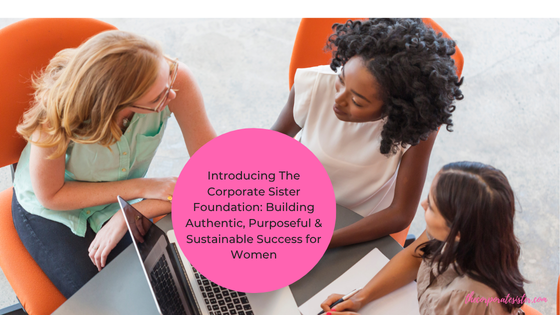
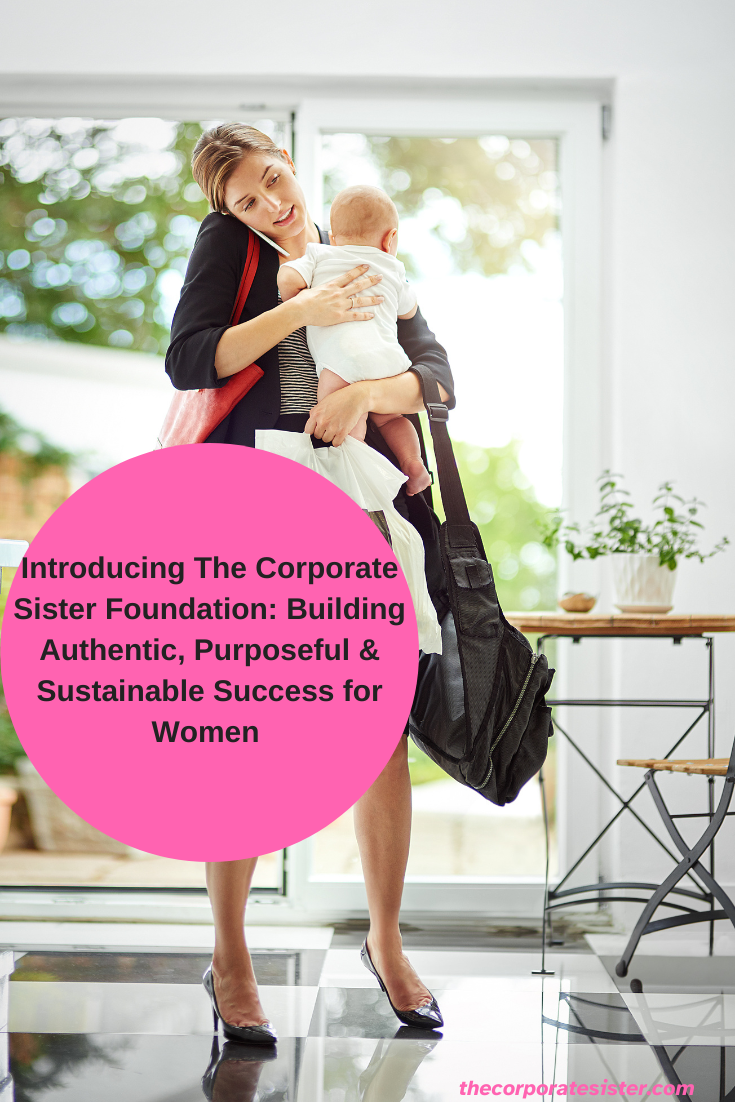
That’s why I founded The Corporate Sister Foundation — a not-for-profit organization dedicated to helping working women and mothers build sustainable careers and lives through community, education, and empowerment.
Why We Created The Corporate Sister Foundation
The truth is, the world of work was not designed with women in mind. For decades, women have been adapting, stretching, and pushing against systems never meant to support them.
But the tides are shifting. We’re in a moment where women are not just participating in the workforce — we’re redesigning it.
The Corporate Sister Foundation exists to turn that redesign into reality. We’re here to make work — and life — sustainable for women. Not just in words, but in systems, tools, and sisterhood.
Our Mission: Building Sustainable Careers, Wealth, and Legacies
At the Foundation, our mission is simple but powerful: To help women build sustainable careers and lives that align with their purpose, potential, and peace.
We do this through three core pillars:
1. Career: Helping women design fulfilling, purpose-aligned careers — not just chase titles.
2. Motherhood: Supporting working mothers as they balance ambition, care, and rest without guilt.
3. Finance: Empowering women to build financial independence and generational wealth through practical education and mindset work.
4.Faith: Grounding women in the truth of their faith and spiritual growth.
Because women shouldn’t have to choose between their success and their sanity.
Our Vision: From Conversation to Action
The Corporate Sister Foundation is more than a vision — it’s a movement. We’re building programs that meet women where they are, whether that’s climbing the corporate ladder, launching a business, or redefining their work-life balance.
Here’s a glimpse of what’s coming:
• The Sister Career Circle — A monthly virtual space where women can connect, reflect, and grow together.
• The Feminine Finance Lab — Interactive workshops teaching financial wellness and wealth-building from a woman’s perspective.
• The Working Mom Reset Series — Tools and sessions to help mothers rediscover balance, purpose, and rest.
Each of these initiatives is designed to help women thrive — not just survive — in the modern world of work.
What We’re Trying to Accomplish
At its heart, The Corporate Sister Foundation is about creating sustainable success — the kind that doesn’t come at the expense of our health, our families, or our peace.
We want to see a world where women:
• Build careers aligned with their values. • Thrive as professionals and mothers without apology. • Take control of their finances and create generational wealth. • Feel supported, seen, and empowered — not burned out and isolated.
We’re creating a new blueprint for women’s work — one rooted in purpose, equity and community.
How You Can Join Us
If you believe, as we do, that the future of work should work for women, there are many ways to get involved:
• Subscribe to The Sister Brief — our weekly newsletter for career, motherhood, and finance inspiration.
• How Can You Join Us?
1️⃣ Become a Founding Supporter: Your support—big or small—will fuel our mission. You can donate HERE !
2️⃣ Join Our Community: Be part of our new volunteer programs, mentorship initiatives, and leadership circles. CLICK HERE TO JOIN THE WAITLIST!
3️⃣ Share the News: Forward this post o a friend or colleague who believes in empowering women.
A Final Word
This new chapter of The Corporate Sister is more than an expansion — it’s a calling. It’s about turning years of conversation, struggle, and triumph into something tangible that can truly change lives.
Because when women support each other, careers flourish — and so do lives.
Welcome to The Corporate Sister Foundation. Welcome to sustainable success — built in sisterhood.
Building a sustainable career as a woman in a professional world built for men is not for the faint of heart. Building a sustainable career in unsustainable times is an even greater feat. Women today face a myriad of pressures, from burnout to flexibility loss, childcare and financial strain, not to mention career inequality, cultural and political pressures, as well as mental and emotional burdens.
If you’ve been questioning the sustainability of your career, especially during these turbulent modern times, you are not alone. Nearly half a million women have exited the U.S. workforce, with larger numbers among working mothers of young children, as driven by outrageous childcare costs, reduced workplace flexibility, and increased gender bias.
Yet, there is hope…
Hope in Unsustainable Times
History has proven that periods of instability have often sparked feminine revolutions that reshaped workplaces, communities, and even entire economies. From the French revolution and the Women’s march on Versailles, to the women’s suffrage and rights movements in the U.S. and recent global feminist movements, revolutionary times have testified to women’s capacity to drive major cultural, economic and political shifts. This moment is no different.
However unstable the times we’re living in, they also present a rare opportunity for women to redefine what a successful and sustainable career is. Now more than ever, women have the opportunity to tap into their deepest reservoirs of innovation, resilience, and genius to birth a new model of career and work — one that authentically aligns with their purpose, process and essence, not just the systems they inherited.
Here are three steps that can help provide a framework to build a sustainable career during unsustainable times:
1. Know Thyself
This ancient maxim has not only survived the test of time — it continues to define the women who do the same. When it comes to career sustainability, self-awareness is key. It extends beyond understanding our gifts and talents to include an honest assessment of weaknesses, technical expertise, and managerial competencies.
How well do you understand the tools shaping and transforming your industry — from AI to finance? How effectively do you collaborate, manage others, or design systems that work? Knowing where you stand on the spectrum of personal, technical, and managerial competencies allows you to understand your current stage of evolution and needs for growth.
As women, self-knowledge runs even deeper. It’s not only about who we are in our work, but who we are across the seasons of our lives. Our careers ebb and flow alongside life events — marriage, motherhood, the highs and lows of relationships, perimenopause, menopause, health changes, and personal reinvention. To build sustainably, we must understand how these phases intersect with our professional paths and adjust accordingly. At every stage — whether we’re just starting out, in mid-career reinvention, or giving back after years of experience — self-knowledge helps us discern not only what our careers demand of us, but what they must give us in return.
A sustainable career is not a one-way transaction. It’s a dialogue — a give and take between who we are becoming and what our work allows us to become.
2. Learn, Adapt, and Leverage Change
Knowing yourself is not enough. The next step is to invest in continuously evolving.
Yes, AI and automation are reshaping industries and eliminating some roles — but they are also opening unprecedented doors for women. Technology is freeing women from repetitive, undervalued tasks and inviting us into deeper, more creative work that requires strategy, empathy, and critical thought — all areas where women naturally excel.
Sustainability, in this context, means staying adaptable. It means continuously learning, leveraging your unique perspective, and positioning yourself where human creativity and insight matter most. When women use the tools of disruption — rather than fear them — we reclaim control over the narrative of work.
How are you staying adaptable in your industry, field, business? How are you leveraging your creativity and unique insights to differentiate and position yourself professionally?
3. Become a Creator of Knowledge
Sustainable careers are not built on consumption alone — they’re built on creation.Women who thrive in turbulent times are not just learners; they are makers — of ideas, systems, tools, and solutions. We can’t afford to be passive recipients of information. We must transform what we learn into innovation, thought leadership, and tangible impact.
AI cannot replace that. It can replicate patterns, but not purpose. It can process data, but not drive meaning.
When women embrace their innate creativity — our instinct to nurture, design, and problem-solve — we move from being replaceable participants to irreplaceable innovators. In other words, we become future-proof.
4. Pay It Forward: Service As Career Fuel
Many of the most successful and sustainable careers have one aspect in common: service. Service is the fabric that ties together purpose and work. For most working and moms, it’s an innate part of career building and success. While giving back can occur throughout women’s entire careers, it tends to culminate during their later years, as part of the reinventive contribution phase occurring between 46 and 60 years of age, as defined based on Donald Super’s lifespan-linespace theory.
When women can fully repurpose their innate nurturing qualities into professional service, they are able to tap into a higher, more fulfilling dimension of work. When this service aligns with their purpose, it then has the potential to unleash a trickle-down effect of positive contributions paying it forward for other women.
Conclusion: Women as Architects of the Future of Work
By knowing yourself, continuously adapting to change, and positioning yourself as a creator rather than a consumer, you can not only sustain your career, but also and most importantly redefine what “career sustainability” means.
In these seemingly unsustainable times, you have a singular advantage. One that women have always had, and that is to know how to build something from nothing. Now is the time to channel this innate creativity into designing careers and systems that not only survive, but thrive the test of time.
How will you be building a sustainable career in unsustainable times?
At the end of every season of life and work as women and moms, we can find ourselves literally adrift, both professionally and personally. Somewhere amid the tension, the apprehension and anticipation, we end up in this random place between passively surfing the waves of the season’s transition and keeping ourselves from desperately drowning in the riptide created by it…Often, this also signals a time of reinvention.
For women, reinvention in general, and career reinvention in particular, is a familiar, albeit often silenced, necessity. Women’s personal and professional journeys are seldom linear; but rather always marked with detours, bends, pauses and new beginnings of all kinds. From stepping into motherhood to journeying through menopause, through shifting careers and life seasons, women’s work constantly demands reinvention.
While the theory originally applied to men’s careers, some key elements can be applied to women’s careers. These include the self-concept, or the notion that career choice results from an individual’s evolving values, perceived abilities, and interests. This is especially relevant to women, whose identity keeps evolving over time, from youth to marriage, motherhood, menopause, and everything in between. The life-space concept, which places an individual’s career as part of their life space, is also reflective of women balancing multiple, interconnected roles in their lives and work. Career adaptability is another concept reflecting the many career transitions, changes and interruptions occurring in women’s careers. Finally, the concept of “recycling” lends itself to women’s non-linear career paths, including employment gaps and breaks.
As such, research based on Super’s theory has identified three phases in women’s careers:
The idealistic achievement phase (ages 24 to 35) marked by early career ambition and the desire for achievement and success.
The pragmatic endurance phase (ages 36 to 45) during which women balance multiple responsibilities and demands from work, home as well as the community;
The reinventive contribution phase (ages 46 to 60), marked by a focus to contribute though work, family and community.
Understanding these seasons is crucial to promoting women’s career success, while caring for their well-being through the different phases of their lives. And this is especially relevant in the tumultuous times we’re living in, as women’s careers face persisting barriers and obstacles.
THE CURRENT CONTEXT WE LIVE IN
In 2025 alone, 212,000 women, ages 20 and over, have already left the workforce, according to the Bureau of Labor Statistics. This is in stark contrast to statistics revealing the entry of 44,000 men in the workforce since January 2025. As a result, women’s labor force participation rate has dropped from 69.7% to 66.9% between January and June 2025. This decrease coincides with the recent rollback of flexible and remote work policies negatively impacting mothers and caregivers, as the Flex Index reports an 11% jump in Fortune 500 companies’ full-time office requirements in Q4 2024. Yet, post-COVID19 research shows return-to-office policies actually hurt productivity, innovation and competitiveness.
Now more than ever, especially in our current political, economic, and social contexts, it is crucial to understand the intricacies of women’s careers.
REINVENTING WOMEN’S CAREERS
So how can women reinvent their careers through the various seasons of their lives and work, especially in the transitional times we’re living in?
Here are three questions that can help in the process:
What season of life and work am I in?
Knowing what season of life and work we are in can go a long way toward devising an appropriate strategy to reinvent ourselves as women. What worked at the beginning of our careers will not work after kids, or through midlife. To each season, its needs, requirements and specificities. Beyond women’s career phases (idealistic achievement, pragmatic endurance, and reinventive contribution phases), there are also seasons that are unique to each and every woman, both personally and professionally. Being able to identify these and be aware of how they impact us, what they demand of us, and how best we can tackle them, is key.
What do I need in this season?
Putting our masks on first as women in and outside of work is not an indulgence, but a necessity. Too many women burn out under the constant pressure of prioritizing others before themselves, risking their health, sanity and the very contributions they bring to society. This is where asking ourselves what we need in the particular season of life we’re in becomes crucial.
Some seasons require more support than others. Certain phases of life and work demand different sets of skills, and entirely different mindsets and ideas. Taking a reflective stance to literally putting our masks on first is indispensable to becoming the version of ourselves we need in the moment.
What are the systemic, structural and organizational opportunities and barriers that I am facing and how can I leverage them?
To blind ourselves to the fact that there are no external factors affecting us in and outside of the workplace is to proverbially bury our heads in the sand. While much of the feminist propaganda of our times has urged women to literally change themselves to “succeed”, the reality is, little has been done to address the biggest change factors out there. These include the systemic, structural and organizational barriers women face day in and day out, from gender discrimination to sexism and overarching patriarchy. The systemic, organizational and structural systems of power that keep setting women back not only do exist, but they are also perpetuated by the misplaced focus on women”s perceived weaknesses or inabilities.
Understanding what these barriers are, as well as what opportunities exist to counteract them, is key to re-imagine how women can thrive in authentic and purposeful careers.
IN CONCLUSION
Somewhere between surfing the waves of the season’s transition and keeping ourselves from desperately drowning in the riptide created by it, there is a middle ground after all. That of understanding that unlike the traditionally masculine stereotype of linear careers, women’s careers are affected by different seasons and phases. They also require different paradigms, models and systems than the ones we’ve been accustomed to for centuries. Only when we understand, accept and implement these, can we begin reinventing women’s careers for the better…
I remember having passionate conversations with my husband about artificial intelligence (AI). A progressive adopter of new technologies, he couldn’t understand my initial resistance to AI. I, as a strong believer in human creativity and intellect, and a staunch feminist at that, insisted on waging a months-long intellectual opposition to artificial intelligence (AI). What an insult to human intelligence! Yet, while Dear Hubby was saving hours leveraging AI to assist him with unending emails and administrative tasks, here I was spending hours trying to get through a half-a-day’s emails. Fast-forward a few months later, AI is reshaping women’s careers and has become my favorite assistant in the meantime…
Actually, recent research by the University of North Carolina estimates 80% of women in the U.S. workforce are in professional occupations highly threatened by AI automation. The most AI-exposed occupations with the highest percentages of womeninclude account and bill collectors, payroll clerks, executive secretaries, typists and word processors, as well as bookkeepers, auditing and accounting clerks. In general, AI mostly impact administration, healthcare, education and social services, all sectors with higher proportions of women. More recently, the 2023 World Economic Forum Future of Jobs report predicts a 27% drop in jobs such as cashiers, administrators, payroll clerks and secretaries.
Yet, despite posing undeniable threats to women’s careers, AI can also provide opportunities for women. As society seeks ways to counteract extreme automation, feminine attributes such as collaboration, compassion and empathy are more than ever relevant and needed in the workplace. While unfortunately reinforcing gender bias, AI also has the reverse potential to identify and address gender inequalities. By enabling remote work and flexible scheduling, it has offered mothers greater flexibility and protecting Black and minority women for micro-aggressions at work.
In addition, AI can also take over some of the more tedious and less productive “office housework” tasks, largely assigned to women. This in turn will allow women to devote more time to value-adding and visible responsibilities, such as leadership and networking-related functions. As the AI-driven automation can hep reduce workloads and increase efficiency, it allows working women and moms to reclaim some of their time while still being employed. This is also valid for women entrepreneurs, who can leverage AI to save precious time and boost their business growth.
HOW TO LEVERAGE THE OPPORTUNITY AND FIGHT THE THREAT OF AI
In this sense, while AI is certainly a threat for women, it also has the potential to level the professional playing field for women. But how can women effectively prepare to leverage the advantages of AI and reduce the drawbacks? Here are some suggestions to leverage the opportunity and fight the threat of AI:
Start with your mindset
Being so skeptical about AI at first, I could not initially see it for the tool that it is. Overwhelmed by the many AI biases against women, and concerned that it would take so many jobs away from actual people, I developed a built-in mindset block. It wasn’t until I learned to shift my mindset that I began to truly realize its potential beyond its visible threats. Once I understood AI can never replicate the unique human and feminine spirit, emotions and attributes such as creativity, empathy, or critical thinking, I began seeing it as less of a threat.
Do you, like I did, have built-in mindset blocks against AI? How do you approach it as a new and evolving technology with its pros and cons? Understanding your own mindset about AI can help you shift from seeing it as a threat to seeing it as a tool that can be leveraged for the benefit of people.
Explore AI literacy
Becoming AI-literate is no longer an option, especially as a woman at work. This means fighting the initial resistance to stick to old habits, routines and processes, and adapt to new technologies. I know all too well the feeling of not wanting to start all over again learning a new disciple or adopting new tools.
From courses to applications such as Grammarly, ChaptGPT, or Claude, there is a plethora of available tools to begin your AI literacy journey. Pick the tools that are most suited to your personality, schedule and appetite to grow in learning and using AI.
Wherever you are in your career and life, by being more aware of these challenges, you can harness opportunities to leverage, critique and improve the technology around you. From participating in STEM fields yourself, to becoming more AI literate, and offering your own perspective, you have the power to change things.
All in all, AI certainly presents many challenges and opportunities for women. As such, it’s reshaping women’s careers and lives in monumental and ever-evolving ways. Shifting your mindset about it, developing AI literacy and advocating for AI gender equality are all strategies women can use to increase the related opportunities and lessen the negative aspects of it.
Is AI more of an opportunity or threat in your career, and how are you leveraging it?
I can’t distinctly recall when it happened exactly. Somewhere between the “tween” and teen stage, my daughter refused to wear dresses. Or at least the dresses I would buy her. While seemingly insignificant, this drew a pretty significant line in the sand of my motherhood experience. And it wasn’t just about the nostalgia of pretty pink flowery dresses either…Somewhere through this shift, the reality of parenting teens as a working mom in modern times brutally imposed itself, with its heavy weight of mental, emotional, spiritual and even physical pressure, tempered only by the bittersweet adventure that is mothering young adults…
Why didn’t anyone tell me about any of this before? Wasn’t I supposed to be warned of the impending, heart-wrenching rip in one’s mother’s heart that is adolescence? And why didn’t anyone share the remedies available to such a drastic transition, especially through the uncertainty of a modern world without a blueprint for working moms?
THE CHALLENGES OF PARENTING TEENS
While there is ample research on the topic of adolescence in general, and parenting’s impact on teens, much less has been studied on the effect of parenting teens on working moms. The reality is, parenting is an ever-evolving, sweet and sour battle for mothers. In the book Maternal Optimism: Forging positive paths through work and motherhood, authors Jamie Ledge and Danna Greenberg describe motherhood as a non-linear path. They also encourage working moms to forge their own paths through its various stages.
TRANSITIONING TO THE ADOLESCENCE STAGE AS A WORKING MOM
As a working mom and parent of teenagers, the transition to adolescence was a particularly challenging one. It wasn’t just about kids growing up or their own personal dress choices (goodbye, flowery pink dresses). Nor was it just about my own nostalgia of earlier years and the bitter sweetness of kids growing up. It was mostly about the unpreparedness that I, and so many other working mothers, feel when faced with the mental, emotional and physical roller-coaster of teenage years.
The days of kissing kids’ boo-boos are now being replaced with the need to be available to manage emotional meltdowns, keep unseen social media dangers at bay, and learn about potential mental health concerns. It also means becoming better at integrating work and life, being there for first dates and soccer tournaments, tracking phones’ activities, and learning new cool words. There are so many joys, big and small, embedded in each precious moment of discovery and learning as a mom of teens. There are also many small and large costs involved, from the switching costs of focus, to the heavier mental load of constantly being preoccupied with teens’ online, mental and physical safety…
In the busy world of modern parenting, no one prepares you for this…As an immigrant particularly, adapting to new ways of thinking and doing parenting in a decidedly different world, no one even thinks to warn you beforehand. As a woman at work, there is no memo explaining that you may have to interrupt a presentation because your teen sends you a preoccupying text, or because it’s only their third time driving on the highway…
MANAGING THE TEEN TRANSITION
So, without a blueprint, and in the absence of a supportive village in many cases, how can we as working moms manage the transition to and new parenting phase of adolescence? Here are three ways I’d like to suggest, from my own imperfect and still very much ongoing experience:
Get prepared!
Don’t wait until adolescence is knocking at the door of your motherhood journey to learn about it. Talk to moms of teenagers around you, ask questions, and start preparing for your own journey into the teenage years.
I wish someone had sat me down for a good, sobering, maybe even tear-filled chat about it. But no one did, because unfortunately there aren’t enough crucial conversations about mothering to go aroung. So instead of waiting for those conversations, why don’t we initiate them?
Define your own brand of adolescent motherhood!
As your kids become teenagers, so does your experience of motherhood. While there’s much valid parenting advice out there, the reality is, parenting is not a one-size-fits-all experience. Hence the need to define and develop your own brand of mothering through the teenage years. While you may choose to be more hands-on in your approach, another mom may opt to adopt a more surrendered perspective.
How you see yourself as a mom during the teenage years is going to affect much of your motherhood journey. So choose a vision and an approach that is flexible enough to reflect who you authentically are and who you’re growing into as a working mom.
Build your own path through the teen years.
Getting prepared for the journey and defining your own brand of motherhood through the teen years is setting the foundation. Building your own path is actually doing the work. This is where you get your hands dirty, and shape your own journey as a working mom of teenagers.
It may mean altering the way you’ve been building your career, allowing for more flexibility and availability. Or doing the healing work that allows you to better understand, evolve and accompany your kids through this phase. It also means having the necessary, often tough, conversations with your teens as you steer them and yourself through this new phase of your relationship. For me, it’s been actively learning what it means to parent teenagers in a modern society. Books such as Dr. Shefali Tsabary’s The Conscious Parent, or The Awakened Family, have been precious guides in the process. Whatever it is for you, it will require taking some action or another as you tread on this path.
Overall, parenting teens should be talked about more often and honestly among working moms. More stories, advice and recommendations should be shared to help working moms. More information should also be shared with places of employment, organizations and business structures, so they can recognize and honor this delicate phase of parenting for working moms. There ought to be more personal and professional support and infrastructure for working mothers going through this phase as well.
By getting prepared early, defining your own brand of adolescent mothering, and building your own unique path through it, you can lessen the shock often involved during these years. You can also leverage the beauty of this phase of motherhood without relinquishing yourself as a working woman and mom.
What advice do you have for working moms parenting teens?
Here I was, standing in front of a full classroom of students, not quite fully ready to step into this new academic career. Everything in my past experience, from shying away from speaking up, to a predominantly behind-the-scenes corporate career, seemed to go against what I was about to begin. But I had to begin… so one word after the other, one practical application after the other, I transitioned careers from Big Corporate to Big Academia. Slowly but surely, I learned to reclaim my own style of leadership in a new career, a new space, and a new expression of purpose. And I’m glad to report I haven’t looked back ever since…
Many Obstacles to Women’s Leadership…
The Merriam-webster dictionary defines leadership as the “capacity to lead”. As a working mom and a woman of color, leadership was initially quite the foreign concept for me. It may also have been for you. I mean, the blatant under-representation of women, especially women of color, from the boardroom to the office and the front of the classroom, has not exactly been encouraging. As of 2023, women only held 10.6% of leadership positions at Fortune 500 companies. This is with only two Black women in leadership, including Thasunda Brown Duckett at TIAA and Roz Brewer at Walgreens. The plethora of societal biases plaguing the very existence of women in certain professional and entrepreneurial spaces has not helped either. Nor has the recent rollback of diversity, equity and inclusion efforts in light of the U.S. Supreme Court overturning affirmative action.
In an era where threats against women’s belonging in and legitimacy are over-abundant, it is fair to wonder how to lead. Or if we can even lead…Some of the most pressing questions around women’ s leadership have been:
How do you lead when very few of those who look like you are in positions of leadership? How do you lead when there is no blueprint or support for someone like you to lead?
And how do you lead in the face of constant change, threats to your very belonging, and societal biases questioning your very existence in certain spaces?
Yet, the leadership we see is not the leadership we can get…
Yet, when it comes to women’s leadership, could it be that what we see is not exactly what we can get? The thing is, when I used to think of leadership, I thought of it as being in a position of authority or power as traditionally defined by society. While this may be true in some cases, what occurred to me through my career is that while valid, this is only an external manifestation of leadership. Although not many women currently hold traditional offices of power and authority, many, if not, most women are natural-born leaders and naturally lead in their environments. Effective leadership skills such as communication, organization and consensus are innate to women. So could it be that the real issue is not so much to focus on having more women leaders, but rather to first help more women develop their own, already existing, capacity to lead?
Experience has taught me over and over again, that true leadership is not a matter of external positioning. Rather, it’s one of internal positioning. As working women and moms, much of the battle of reclaiming our authentic brand of leadership starts within. It starts with the reframing of our mindsets about what leading means to each and every one of us. It is in the development of our internal capacity to lead first, which then flows into authentic external manifestation.
If you have been wondering how to reclaim your own leadership in these uncertain times, here are three strategies you may want to consider:
Define your own brand of authentic leadership
What does leadership mean to you in this season of your life and career? This is a question I invite you to ponder not just every once in a while, but periodically and consistently. While it took a big shift for me to reclaim a sense of authentic leadership, it may not have to take as much for you.
Whether you are just starting your career, or in the midst of a personal or professional transition, now is as good a time as any to define your own style of leadership. Some questions you may ask yourself in the process include:
What are your specific strengths and values, and how do they color the way you lead?
What is your style of leadership?
Which spaces are most aligned with your leadership, and which are not?
If you’re on your own leadership journey, I strongly recommend reading “Dare to Lead“ by New York Times best-selling author Dr. Brene Brown. This book will help you become braver as you cultivate the courage to lead from the heart.
Develop a holistic approach to leadership
Leadership starts within. It is after all, the capacity to lead. So it cannot, and should not, be confined to the bounds of some office space, boardroom, or professional arena. As women especially, our leadership tends to permeate every area of our lives, from motherhood, to relationships and work. This is exactly what makes us capable of leading in very unique, authentic and effective ways.
As you reframe your own leadership, let it build up from everything you bring to the table as a working woman and mom. How you lead at home will impact how you lead in the workplace, and vice-versa. There are no compartments really. There are only parts that can and should integrate one with the others, like puzzle pieces that ought to work together to create a full, and fulfilling picture of a life well-lived.
Some questions you may ask yourself include:
How does the way I lead at home or in my relationships inform the way I lead at work?
What are the skills, strengths and values I bring to my leadership outside of the workplace? How can I repurpose them professionally? And vice-versa?
What kind of leader am I in the various areas of my life? And how can I embrace a holistic leadership approach encompassing all the spaces I evolve in?
In her book ” Lead from the outside“, political leader, serial entrepreneur and New York Times best-seller Stacey Abrams discusses harnessing the strengths of being an outsider. As she argues that differences in race, gender and class are surmountable, she also helps to see leadership in a more authentic way.
Adapt, pivot and change
Nothing remains the same. Developing your own capacity to lead is also developing your ability to adapt, pivot and change. From remote work to the advent of artificial intelligence, the world of work continues to evolve. So must we continue to adapt and evolve as well…
Transitioning careers has taught me invaluable lessons on the power of adapting, while remaining authentic to one’s purpose. As a matter of fact, had this transition not happened, I would probably not have stumbled upon my own capacity to lead. Change is often the catalyst that spurs us to step into areas of ourselves we may not have suspected, or may have previously minimized. So if there is an area of growth or change that you have been resisting, this may be your sign to use it as an opportunity to adapt, pivot and change.
Some questions you may ask yourself include:
What are the changes that are happening in my personal and professional world?
How are these changes calling me out of my comfort zone?
What can I learn from and become through these changes as a leader?
If you’re looking to develop your capacity to adapt, pivot and change, “Who Moved My Cheese?” is an absolute read. This book offers a simple yet so effective approach to handling change and personal growth.
All in all, since the dawn of times, women have reclaimed leadership despite the fear and uncertainty surrounding them. Today is no exception. By reframing your own style of leadership, building it up from the sum of your life experiences, and developing your own capacity to adapt, you can do the same, on your own terms.