Please note this is a sponsored post for which I may be compensated.
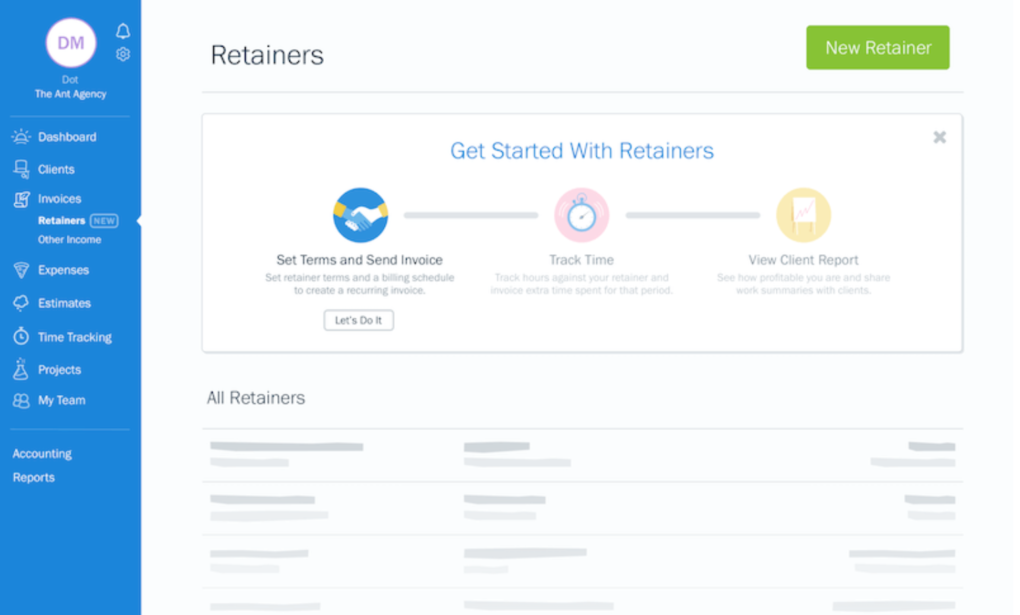
Did you know that 85% of businesses fail because of poor cash flow? If you’re an entrepreneur, this figure may be making you shudder. After all, your business depends on a healthy and consistent cash flow. However, the sad reality is that many entrepreneurs are subjected to poor billing methods that hurt their cash flow. As a Certified Public Accounting (CPA), keeping track of billing is my least favorite business activity. This is where Freshbooks Retainers, the new option for Freshbooks customers on Premium or Plus plans, comes in.
If you’re not familiar with Freshbooks, it’s an invoice software that helps you add simplicity to your small business invoicing and billing. Not only does it allow you to create professional ooking invoices in seconds, it also lets you accepts various forms of payment, including credit cards and ACH. As a result, you can automate your business’ invoicing.
Basically, with the new Freshbooks Retainers option, you’ll be able to bill clients upfront. You’ll also have the ability to track your time and adjust it based on the actual work completed.
Ensuring your biling is done accurately and on-time
Consolidating your invoicing process without having to use multiple systems and apps
Focus on doing what you love and providing your clients with quality work
Most importantly, Freshbooks Retainers help you set clear guidelines and expectations with your clients. The amount, details and overtime billing are already set in the system, which will clarify the conditions for delivery. It’s also a great way to look professional and on top of your business.
The new Retainers option also gives you valuable insight into your business’ time tracking, trends, and future forecasts through efficient summary reports. This is a precious source of information that you can leverage to grow your business and achieve more profitability.
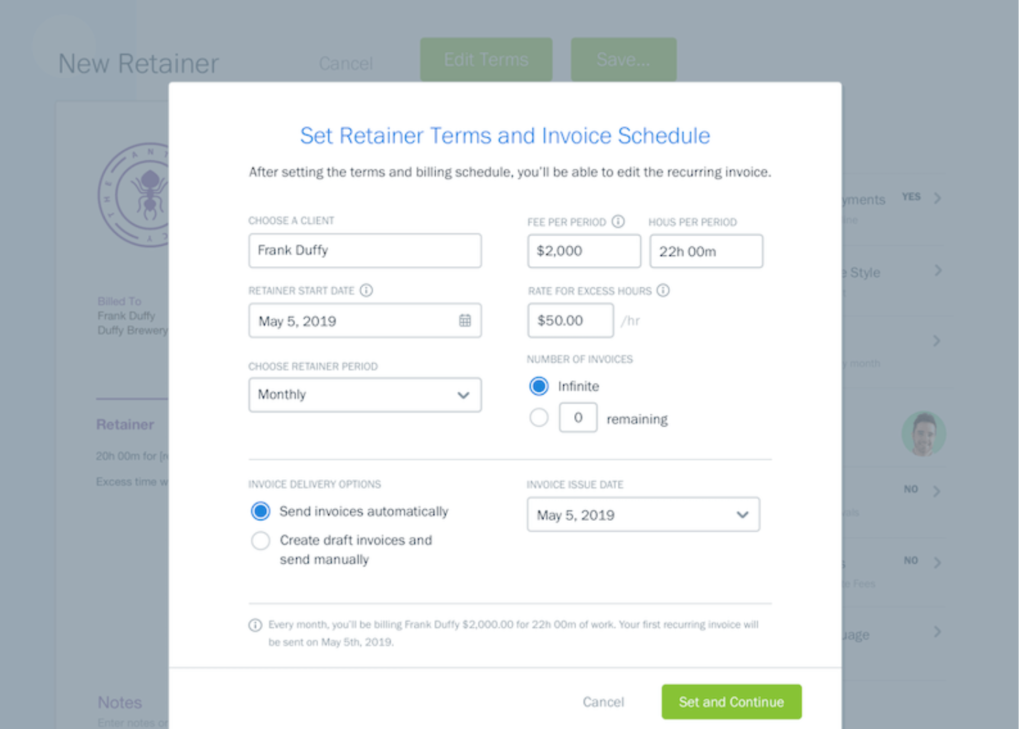
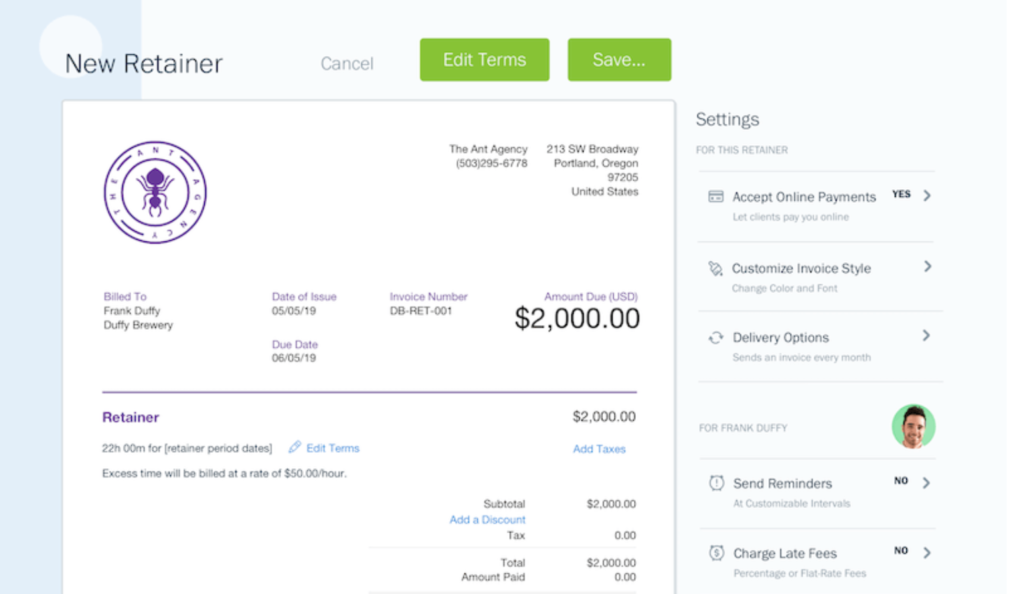
Start by creating your Retainer by clicking on “New Retainer”Next, continue by setting your retainer terms and invoice schedule.Your new retainer is now set up.
What struggles are you facing with your small business’ cash flow?
Have you ever felt like despite all the noise around diversity and inclusion, your own diversity at work feels like an obstacle? From the way you wear your hair, to the accent in your voice, or your sexuality, you may have felt like your “difference” made you an outcast. That maybe it was best to wear a mask, and conceal the “extra” diversity that could impair your ability to climb the corporate ladder, get the business loan, make the right contacts, or simply be respected as a valuable colleague.
Don’t get me wrong, most of us wear masks, especially in a professional and/or corporate setting. Just try and compare your boisterous voice at the family cookout last weekend, with your “prim and proper” intonation at the Board meeting. I’ll leave some of the other choice words out….And there’s no shame about it, either. Different contexts sometimes require different parts of our personality. The problem, especially for working women and minorities, occurs when the “mask” becomes a semi-permanent (or permanent) fixture of our careers and lives. When it becomes too hard to be who we truly are and remain authentic. When at times, we’ve even lost sight of who we are, what matters to us, what makes us us, happy, fulfilled, and all the way together…
I remember times at the beginning of my corporate career when I would feel so intimidated that the pitch of my voice would go up several octaves every time I had to speak up. I can also recall the times when sharing that I was born and raised in Senegal was followed by a loud silence in the room, after which I questioned if I should ever reveal this at work again.
There are times when corporate pressure and the fear to lose a paycheck can really make you get out of your true character. Many succumb to this pressure daily, compromising, changing who they are, from the pitch of their voices to the decisions they make on the job. No judgment here, the reality is more complex than we see on the surface, especially when your mortgage payment, kids’ tuition and car note hang in the balance. All of this can make it challenging to take off our corporate and/or professional masks, and really show up authentically in the workplace. This is especially true for working women and minorities, who may stand close to the edge of privilege.
Yet, there is a cost to not honoring your diversity in the workplace. It may be the silent cost of self-betrayal and the resulting lack of fulfillment that ensues. It may also be the lack of confidence from yourself and others. However, as terrifying as it may be, there are ways to honoring your diversity at work and enjoying a more fulfilling career:
Show up as you are
I was recently listening to a podcast during which an African-American executive woman revealed that wearing her hair in braids at work also gave permission to other women like her to do the same. I remember struggling with my decision to wear my hair natural when I first transitioned to my natural curls. Would “they” be taken aback by my appearance? Would this have a negative impact on my career? Years later, I realize going natural was not just the best decision for me, but it was the best decision for my career. Any place that I would not fit in because of the way I looked was not for me…
So show up as you are. Don’t be afraid to wear your true hair, origin, accent or anything else that makes you you. It’s the best way to figure out where you fit in, and what environments are the most mutually beneficially to you.
When in doubt, do not hide
One of the most damaging pieces of advice I was ever given, especially as a woman of color, is: “Keep your head down and work hard.” You may also have received the same piece of advice. Over the years, I realized that as working women, and especially as women of color, we’re encouraged to hide behind our performance. We’re tacitly prompted to deny our uniqueness behind longer hours, more masculine attitudes, and the appearance of perfection. Or we’re warned to be cautious and make ourselves invisible.
When in doubt, refrain from hiding who you are. Refrain from shrinking and becoming invisible. Put your head up and make your presence be felt. Don’t just work hard, speak up for yourself too. Allow yourself to take space.
Be the example of diversity you need
I mentioned earlier the example of the African-American executive who by wearing braids, implicitly gave other Black women in her company permission to do the same. I’ve learnt that honoring your diversity also means putting it to work at the service of a cause greater than yourself. You may be the only image of diversity that some people will see, or one of a few.
You may be the reason why your fellow Latina sister may feel empowered to speak up at the meeting. Your very presence in the room may inspire a young Black girl to start her own business or go for the career of her dreams. You may just be the example of diversity you need yourself. And that is honoring your own diversity…
Be willing to walk
Sometimes, honoring your diversity also means walking away from environments and places that stifle it. It’s understanding that you can better honor the truth of who you are somewhere else. It’s a painful, but liberating realization.
In all cases, take the lessons you’ve learned with you, let go of any bitterness and resentment and continue on your own journey.
Are you committed to taking off the mask and honoring your own diversity?
Welcome to the TCS News Roundup, where I round up the lifestyle, career and business news that inspired, excited, made me smile (or laugh out loud). Take a read…
In feel-good (and life-changing) news, Fortuneshares the generous act of billionaire Robert F. Smith who forgave the student loans’ debt for more than 400 Morehouse graduates
Business Insider reveals that while women earn 60% of bachelor’s degrees, they graduate owing $2,700 more student debt than their male counterparts
Interning this summer? The Daily Museoffers 5 steps to writing the perfect internship resume
I got stuck at these words uttered by keynote speaker France Winddance Twine, Professor of Sociology at the University of California Santa Barbara during the 2019 Women of Color in the Academy conference. Through her personal stories, she taught us as attendees that especially as women of color, we cannot necessarily expect other women of color to be our allies in the workplace. It was at once a shocking and expected revelation for me. I know all too well of the “Queen Bee Syndrome”, and the erroneous yet popular mindset that there is only one (or at best a rare few) spots for women of color at the top. What I expected less, was the blatant truth that allyship does not always come from where we expect it to.
But first, let’s clear up what an ally is. An ally is any individual involved in the promotion and advancement of an inclusive culture through positive and intentional action. The most effective allies:
Learn to recognize systematic injustice and instances of micro-aggressions
Advocate for other more marginalized individuals and/or groups of people
Actively share opportunities, and
Listen and support underrepresented individuals’ experiences.
Often, we see allies in people who look like us, especially when we’re part of under-represented or marginalized groups. While this may very well be true, it’s also important to recognize that allyship can come in the form of someone who does not look or behave like us. As a matter of fact, there have been many experiences, forged by insecurity and a preponderance of the “Queen Been Syndrome”, of minorities acting as the very opposite of allies to other minorities.
In my own experience, I have learnt that unlike the realities of systematic inequality and lack of diversity, allyship can come in many shapes, forms, and yes, race, color, gender and sexual orientation. I think of the professors who advocated for me and shared incredible educational and career opportunities that changed the direction of my life. I think of the formal and informal mentors who believed in me more than I believed in myself. The point is to pay attention to the actions of those who are positioned as potential or actual allies, more than what they look like or what flattering or temporarily encouraging words they may utter.
Here are a few questions you can ask yourself to recognize and build relationships with allies in the workplace as a woman of color:
Are they supporting an inclusive culture?
If there is a push to promote and advance inclusiveness, whether through diverse hiring practices, employee resource groups and/other resources, it is a god indicator of a potential ally.
Are they mentoring other women of color?
Mentoring women of color or other diverse individuals is also a great indicator of allyship and inclusiveness.
Are they educated about under-represented and/or minority groups at work?
Asking questions and learning about minority cultures, backgrounds and religions is crucial when it comes to being an effective ally. Someone who takes the time to get educated on what it means to be a black woman or a minority at work is also someone who may serve as a powerful ally.
All in all, allyship is one of the most powerful keys to promoting and advancing diversity and inclusion in the workplace. However, it is paramout to learn to apply, recognize and accept it so as to unlock its true power.
Do you have allies in the workplace? Who are your allies?
During Ramadan, which happens to be the ninth month of the Islamic calendar during which the revelation of the Quran to the Prophet Muhammad occurred, Muslims observe a rigorous fast for about 30 days. This is done until the Eid-al-Fitr holiday, when the fast is broken. During this time, most still have to attend to their regular work and personal duties and routines, despite the observance of the fast.
I was born and raised in Senegal, a predominantly Muslim country. Although I was raised Catholic, I saw most of my Muslim friends, along with their families, partake in the sacred Ramadan fast every year. I learnt through them the rigors of this holy month, and developed much respect for those who observe it. As Senegal is a very inclusive country, I also learnt to take this inclusivity with me every place I went. Even today as an immigrant in the US, I’m still reminded of how important it is to be inclusive in all places during Ramadan.
Here are 3 tips out of my own experience and that of so many others, to practice inclusion at work with our Muslim co-workers during Ramadan:
Get informed
Not everyone is familiar with Ramadan, and that’s ok. However, there are countless sources of information and available research to get educated on it. You can learn about the traditions around it, how it’s observed, and the undeniable consequences on work and life. This can help you better understand, and support your colleagues during this time.
During Ramadan, Muslims fast from sun-up to sun-down. This is an important change to consider and be inclusive about in your teams and departments. A good start may be to talk among your teams, especially if you’re a manager, and make sure everyone is aware of fellow co-workers observing the fast, and how best to support them.
Take it into account when organizing events or meetings around food, so they don’t feel excluded. It could be as simple as offering the option for take-outs or wrapping some of the food for later. It could also be refraining from pressuring a fellow co-worker to eat or drink. A small gesture can go a long way towards showing compassion and inclusiveness.
On the other hand, please keep in mind that not all Muslims necessarily fast during Ramadan. Additionally, some may only do so during part of the month. This can help in avoiding awkward conversations as well.
Be willing to be flexible
Last but not least, flexibility is key when supporting co-workers during this time. Different individuals observe Ramadan differently. Be open to colleagues’ suggestions as to how best to support them during this time. It may be affording them the opportunity to come in late, leave early, or maybe alter their work assignments in some way or another.
Most importantly, supporting colleagues and co-workers during Ramadan is a matter of being open to learning about it, showing consideration and inclusiveness, and being flexible.
How else have you supported Muslim co-workers and colleagues during Ramadan?
There’s nothing worse than spending 40+ hours a week at a job that bores you. No career is exciting every single day, but if you’ve mastered your job and no longer feel challenged at work, it’s time to look for something different. Rather than browsing job listings for a new job doing the same old thing, consider one of these career-defining moves if you’re ready for a career challenge.
Chase a Promotion
You’re so good at your job, you could do with it your eyes closed. Instead of disengagingout of boredom, use your expertise to negotiate a promotion. A new role means more challenges and higher pay. If you decide to leave the company later on, you’ll have more skills to showcase on your resume.
Start a Business
Do you get a thrill out of learning the ins and outs of a company? If you enjoy wearing many hats at work, entrepreneurship could be the perfect fit for you.
Not up for the risks of entrepreneurship? Consider a career change if you’re unhappy with your current field. Although it might mean a pay cut, switching industries could be the first step toward a fulfilling career.
Going back to school isn’t necessary for many career changes. Odds are, you have transferable skills that would make you an asset to any job, even if your technical skills need some work. Research the careers you’re interested in and take note of the qualifications you see on job listings. If you check most of the boxes but not all, use online learning to close the skills gap.
Go Back to School
If you want to make a big career leap — say, from marketing to medicine — going back to school is a must. Attending university as a non-traditional student isn’t for everyone, but lots of mid-career women find that they’re more focused and driven as students now than they were straight out of high school.
If you’re going to spend eight hours a day, five days a week (or more!) at your job, it ought to be something you enjoy. Instead of feeling trapped in a job that bores you, start thinking about the next opportunity. You don’t have to make the leap today, but by weighing your options and planning ahead, you’ll be ready when opportunity strikes.
Are you ready for a new career challenge?
Gloria Martinez is the creator of Womenled.org, a website dedicated to educating people about the many women-led achievements that have shaped our world. Her mission is to inspire young women to act boldly when it comes to their careers.
Take Toni…Toni just lost the promotion she has been working tirelessly for all year. Sandra knows, because just like everyone in the office, she received the email announcing Daevon’s new title. The title she had been after for all this time…Although it was only 3pm, she decided to pack up and headed out the door, mumbling something about a doctor’s appointment to the secretary. She was home when her husband and the kids came home, in her “bad days” pajamas, glass of wine in hand, tears in her eyes. All went downhill from there. I’ll let you picture your own version of the story…
LikeToni, I wish someone would have told me how to deal with a career crisis at home as a married or partnered working woman. Losing a job, being demoted, or generally being unfulfilled in your work, are all things that can negatively affect one’s home life. Many, if not most, have faced at least one career crisis that rocked our home lives. I remember facing my first career crisis and having no idea how to react, what to do, and most essentially, what to avoid doing.
Unless you’re blessed with a constant, uneventful career, you’re bound to face ups and downs at work. Some of the latter may never amount to full crisis stage, but some may. Even for those small work mishaps, it may be challenging to leave it all behind your cubicle or office desk at the end of the day. If your career or business is weighing on your mind, not discussing it with your partner or your closed friends and relatives is nearly impossible.
I tried to apply the proverbial “leave work at work” piece of advice, and draw a strong line between career and home life. Needless to say, it didn’t work. Even when I swore to keep work and life separate, my face would betray me, exposing all my business in the middle of dinner. Truth is, I never believed the different areas of our lives should be kept apart from each other, in their own well-kept compartments. Everything we go through is connected, and attempting to draw barriers between our varied life experiences doesn’t benefit us in the long term.
It took me a while to deal with the inevitable nature of career crisis. Over time, through many ups, downs and lessons learnt, as well as through learning from others, here are a thing or two about dealing with a career crisis at home:
You don’t have to carry it all on your own
A career crisis is not something you have to face on your own. It’s ok to share the difficulties you’re facing at work with your significant other at home. If you’re not able to do so, then you should revisit how much support you really are getting in the relationship.
Use it as an opportunity to strengthen your relationship
Tough times can always serve as an opportunity to strengthen your home relationship. It’s during those challenging episodes that partners can show more of their vulnerable side. It’s also when their commitment can be re-affirmed and even expanded.
But…don’t overburden your home life with career pressure
However, as much as you should count on your home base to support and shoulder you in times of career crisis, there’s a risk of over-burdening your relationship with your work. While you don’t have to deal with career challenges on your own, you also have to balance it all out. If your home life is at the mercy of your career, or vice-versa, there’s an imbalance that may spell trouble for you.
All in all, every situation is different, and so is every home and career. It’s up to you to evaluate the right balance between what you can ask of your home base and what can destroy it when facing a career crisis.
Now, your turn: How do you deal with a career crisis at home?