by Solange Lopes | Apr 25, 2018 | Career
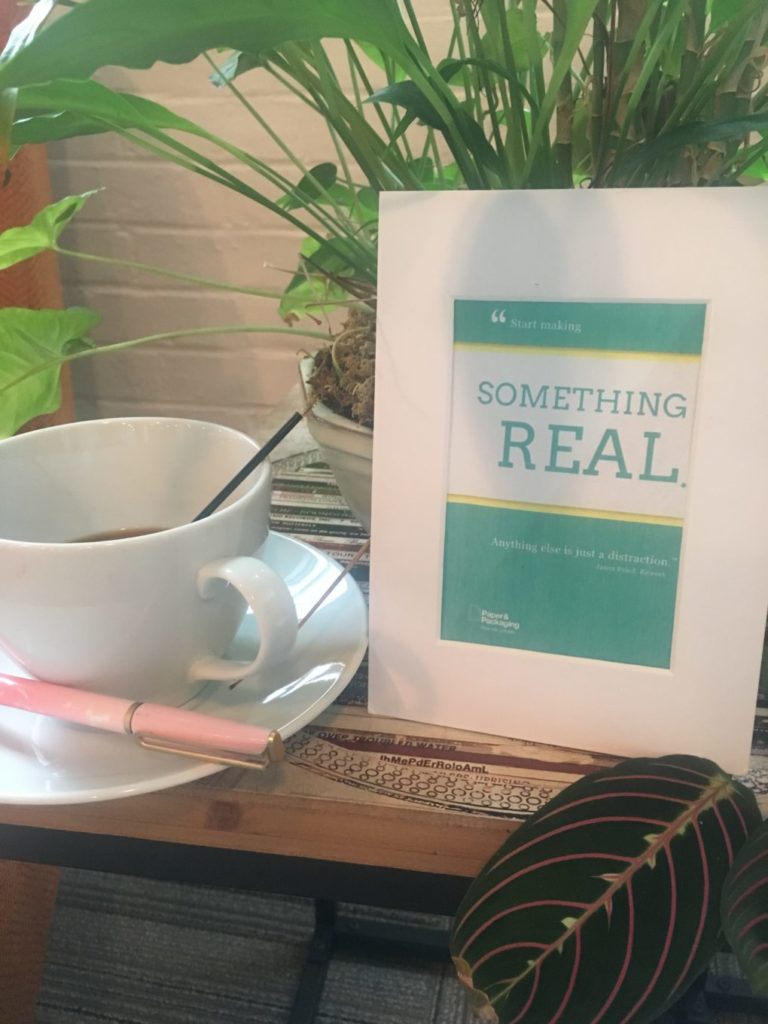
This post is sponsored by BabbleBoxx.com on behalf of the Paper +Packaging Board #ad
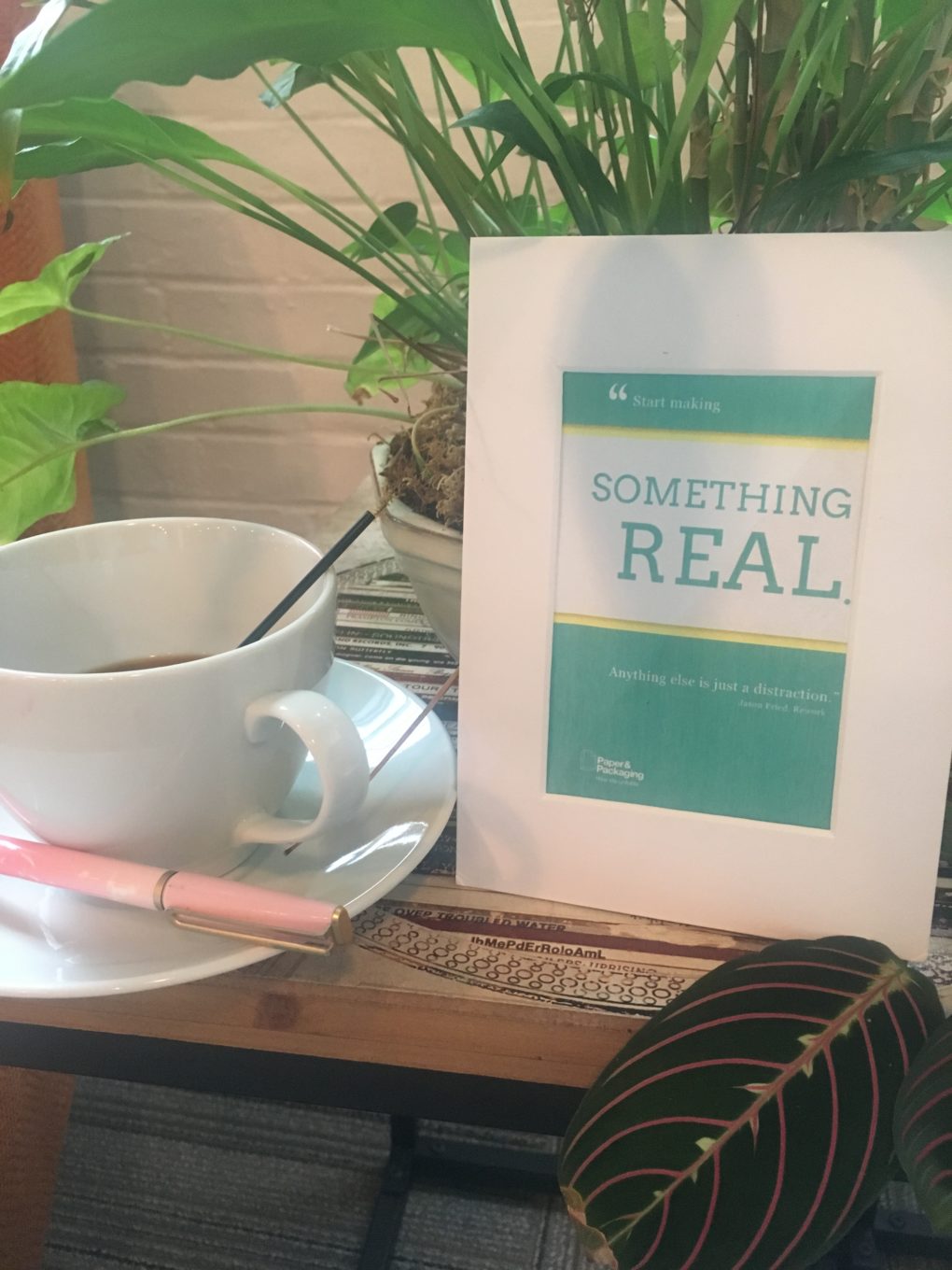
As a professional or an entrepreneur, how many times have you felt overwhelmed by technology? Do you often seek a respite from the onslaught of apps, alerts, and other tools that are supposed to increase your productivity but instead diminish it? And how many times have you had to put your smartphone away to focus on the task at hand or avoid a disaster (hello, distracted driving!)? I know I have, many times over…Truth is, in the midst of our distraction-prone, tech-addicted, multi-tasking society, focusing and being your most productive self can be a challenge. Yet, it really can be as simple as going back to the basics and… putting pen to paper.
I grew up in Senegal, West Africa, at a time when simplicity was a way of life. If you missed a phone call, you wouldn’t know until you got home (and that’s if you even had a phone at home). Tests were administered on paper, and you didn’t have to fear a technical glitch would mess up your entire day. While I didn’t realize it then, this simplified way of life that promoted note-taking and limited distractions also helped with learning faster in general. According to this Psychological Science study, the process of taking notes significantly improves learning and information retention.
There’s just something about pen and paper that instantly warms my heart. Some of my best childhood memories involve paper of some sort. As a busy working mom, I watch my own daughter collect journals, notebooks and pens with nostalgia and a renewed appreciation for the gift of paper in work and life. While it may seem that smartphones, apps and other electronic gadgets are taking over our lives, the truth is, putting pen to paper is still one of the best ways to learn, be our most productive selves, and enjoy the process of creativity and life in general:
-
Write and read to enhance your personal growth
If you’ve ever felt unsure, down or depressed, you know how writing down your feelings and thoughts can improve your mood. Even better, it can help significantly enhance your personal growth. There’s a reason why it’s called “writing therapy“. I journal daily as a mental and spiritual practice to help me process my emotions, get clear on my strategy and grow through what I go through.
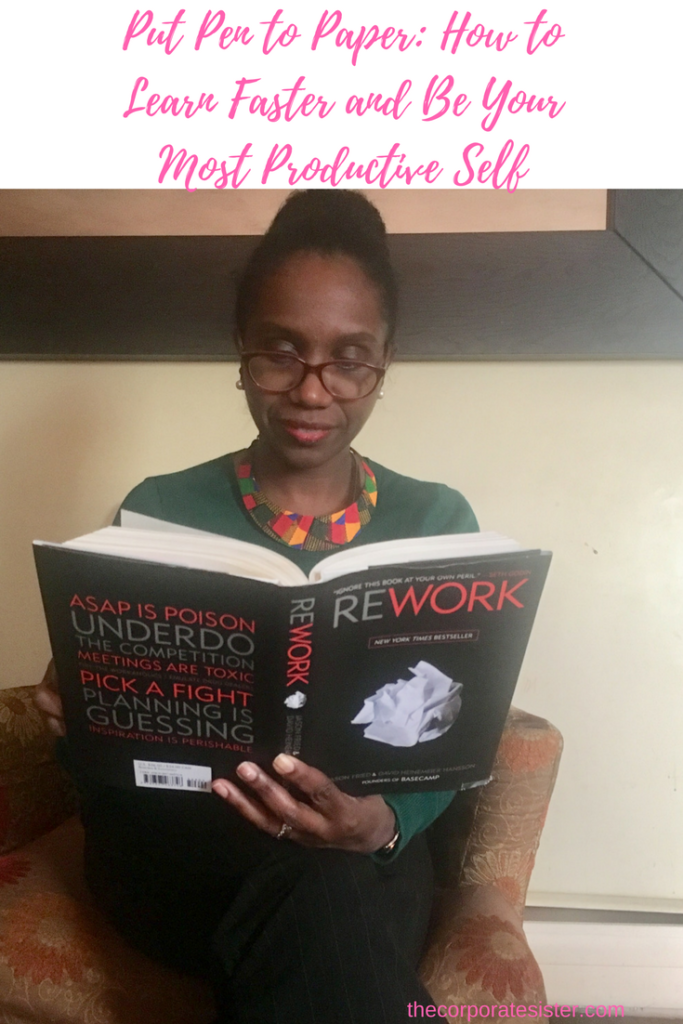
Have you also noticed how refreshing it is to read on paper? As a matter of fact, reading on paper has been proven to help improve memory and increase mental development. My most relaxing moments are spent with a physical book such as the entrepreneurial masterpiece Rework. That’s why I challenge myself to read as much as I can every single day, even if that means hiding in the bathroom away from the kids. To challenge yourself to read more, you can join here to take the pledge to read 15 pages a day.
-
Put pen to paper to achieve your goals
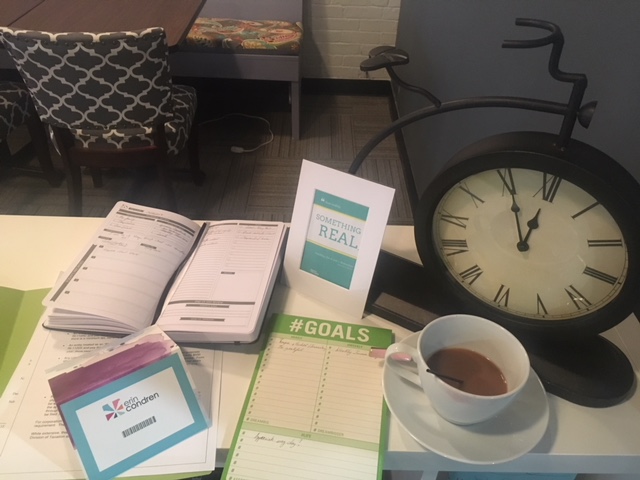
Writing down your goals and objectives is a great way to clarify them. It also empowers you to pursue them with added resolve. Best-selling author and entrepreneur Tony Robbins advises going further than just thinking about your goals, and actually writing them down.
There’s something about writing down your objectives that not only motivates you to achieve them. It also allows you to check back on them and track your progress, in addition to keeping distractions at bay, including messages, apps and videos. I love doing so and enjoying the experience with fun tools such as the pre-sharpened, original hardwood pencils from the General Pencil Company.
-
Use paper to slow down and refuel
Have you noticed how many apps exist to actually help you shut down the noise of technology? There are actually many tools available to mute notifications from computers and smartphones, and help you be tech-free for a while.
As much as I love using technology, I make it a point to step away from it periodically, tune out and put pen to paper to slow down and refuel. One of my favorite daily activities is journaling, which helps me process my thoughts and emotions and get more clarity on my goals.
Another one of my absolute favorite things to do is reading. For me, there’s nothing like the smell and feel of a traditional paper book to get in my relaxed zone. Despite being a busy mom, I try to make the time to read at least a half-hour every day. You can do the same by taking the pledge to read 15 pages a day.
-
Increase your creativity with paper
According to Gretchen Rubin, author of The Happiness Project, even the simple act of jotting down notes on paper helps cultivate your creativity. As a creative person, I’m always amazed at what happens when I start putting pen to paper. Ideas I may not have thought about previously unexpectedly come out and new creations emerge.
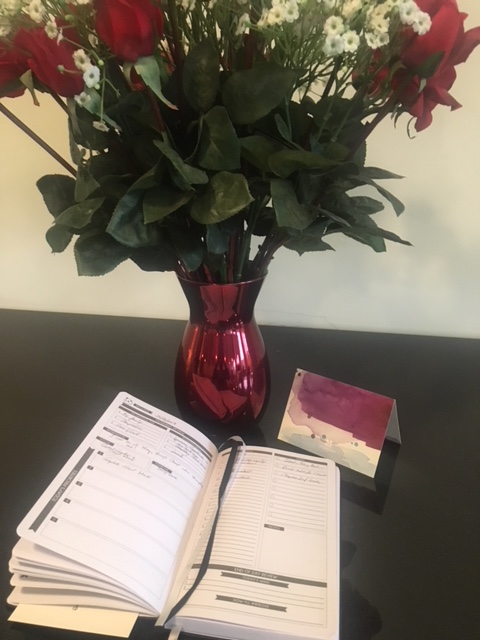
Even for non-creatives, writing things down can spark unusual inspiration and creativity. It’s the reason why I carry a planner or notebook like the Panda Planner along with me at all times. Not only is it easier to transport than a computer, there’s also no worrying about finding a power source in case the battery dies.
-
Boost your career with writing
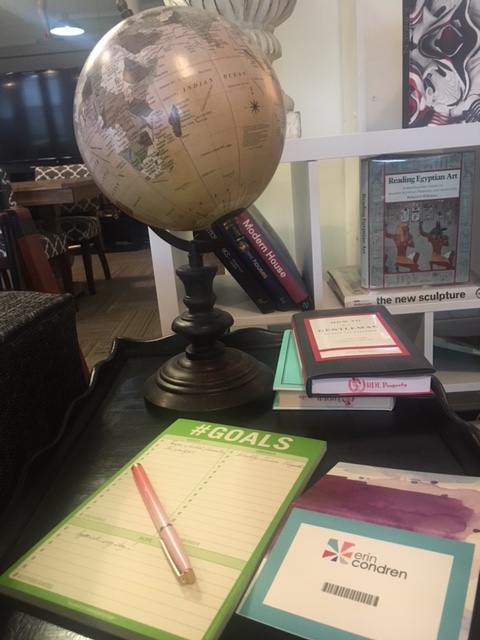
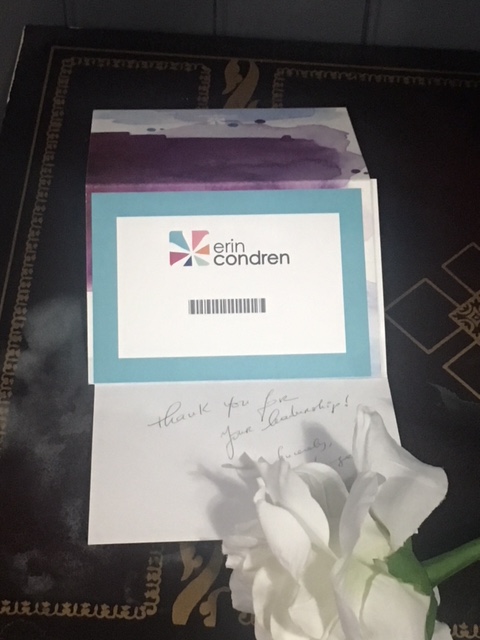
Using paper can make all the difference in your job search and career. Sending a written thank you note after an interview adds a distinctive touch that makes you stand out in a sea of emails. Similarly, written thank you notes foster positive relationships while at work. It’s a personal step that sets you apart from the crowd, and impacts your relationships significantly. I personally love the Erin Condren notecards for their professional and elegant look. A thoughtful thank you card may just be the lasting touch that gets you the job, or helps you finalize the business deal. It also activates feelings of gratitude in you, which keep your brain healthy and happy. An overall win-win…
In addition, lessening your dependence on technology can help you avoid losing precious documents or ideas due to lack of power or unavailable wi-fi. Don’t let a low battery or missing wi-fi signal keep you from writing down a great idea so you don’t forget it, or foregoing hours of work as a result of technical issues.
-
Get organized
While there are many electronic to-do list options available, paper to-do lists are still more efficient. An electronic to-do list can easily be lost behind another screen, but a paper list provides an easier visual cue you can keep on hand to remind you of what you have to do. Additionally, a paper to-do list motivates you to achieve your goals faster, so as not to have to rewrite them.
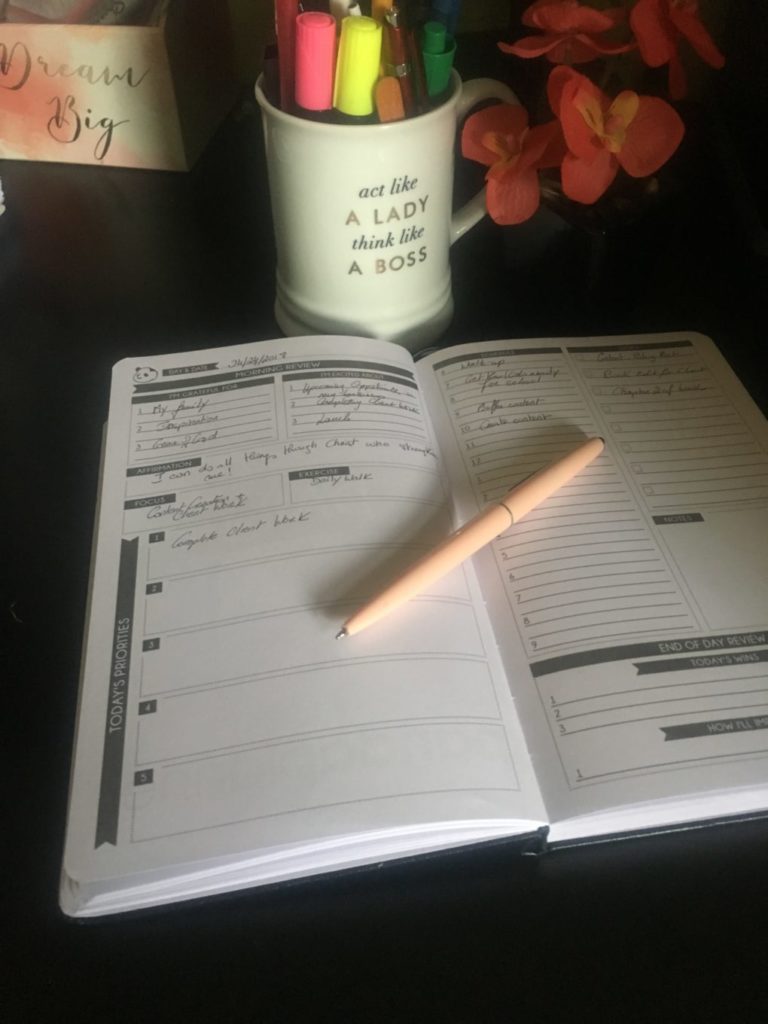
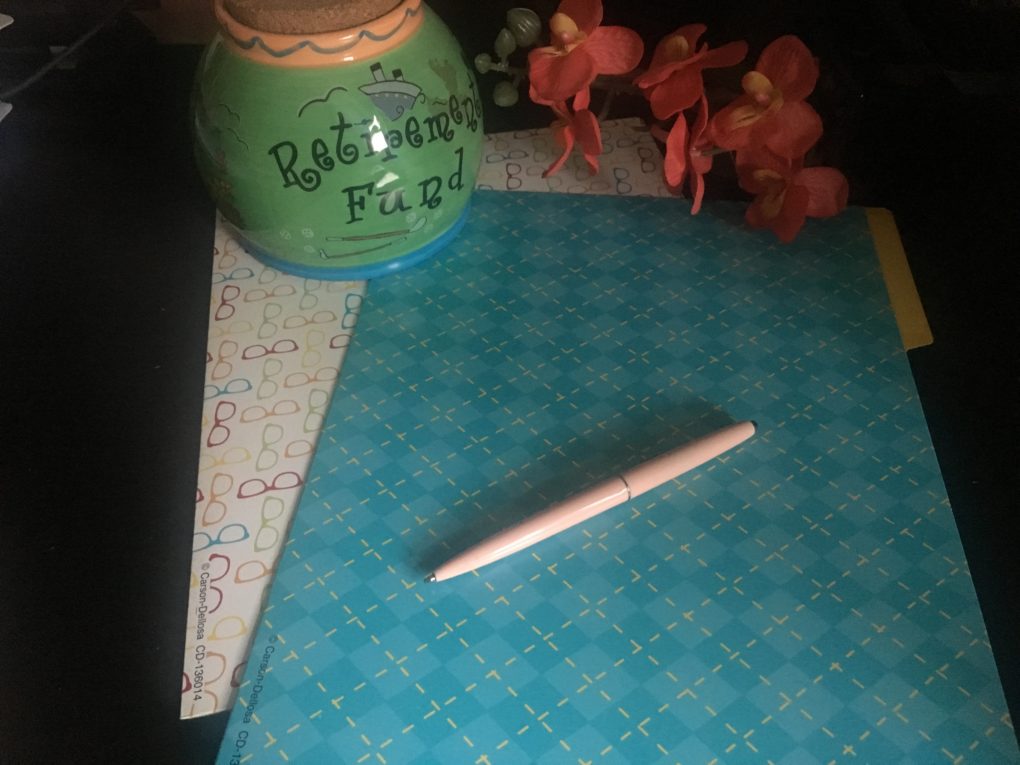
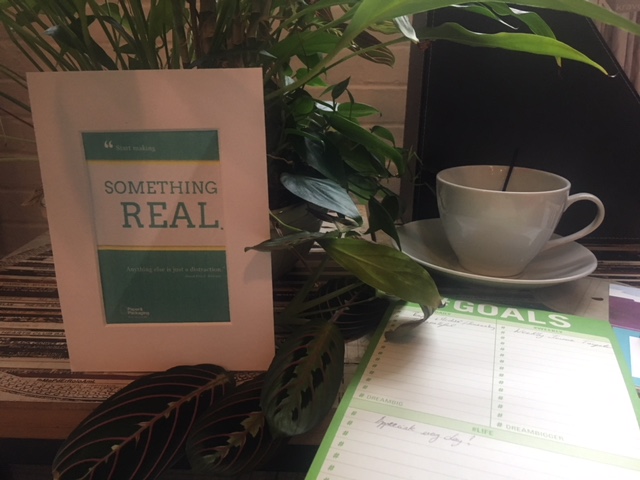
I’m obsessed with the Knock Knock Goals notepad, as a fun way to list my goals and keep them visible all day long. As a Certified Public Accountant, it’s also important for me to keep track of all my business documentation by using file folders such as the Carson Dellosa smart and colorful file folders.
-
Get happier
Overall, using paper to write about your goals, process your emotions, list your tasks, and so many other written activities, can generally make you happier. According to this 2011 study, such writing can foster increased well-being, as well as decreased incidences of illnesses.
There’s power in being able to shut down the noise around you, focus on your goals and engage in a process of creativity that pushes you to be your best self.
In conclusion, using paper is a powerful way to balance out your use of technology and tune out the external noise for greater productivity and focus. Fostering your personal growth, learning faster, and living better can be as simple as putting pen to paper. Let’s start today…
For more inspiration on being your most productive and best self, visit 15 pages a day.
To Your Success,
The Corporate Sister.

by Solange Lopes | Apr 17, 2018 | Career
As much as I love writing, business report writing was not always my favorite. As a creative, I used to perceive them as too rigid and overly structured. However, what I ended up realizing is that not only are they powerful tools to communicate your ideas in any business setting. They’re also a compelling way to express yourself creatively at work and in business, contrarily to popular (and negative) common perceptions.
If you’ve been in business for some time, you know how important it is to properly write business reports. These come in many formats and can be used for different purposes, yet they share the same essence and guiding principles. Most importantly, they can be used to successfully write your way to being positively noticed at work.
Successful business writing is not just reserved to a select few only. Neither is it restricted to a few guidelines that can prevent you from truly expressing your ideas. Instead, it boils down to understanding a few key pointers and being authentic to your own voice.
Here are 7 tips to successfully write any business report:
-
Start with the end in mind
Before you even begin putting pen to paper, begin with the end objective in mind. What are you trying to accomplish in this report? What message are you sending to your audience? What are you trying to obtain through this report?
Defining your objective will set the direction for your report. When writing an audit report for instance, your objective is to express an opinion, whether positive or negative, resulting from the audit work performed as related to a certain process. Your objective will be to support this opinion throughout the report and clearly back up the results of your work. If you’re writing an informational report in which you’re not expressing any opinions for instance, your goal is simply to share information.
-
Know your audience
Your business report has an intended audience in mind. Do you know who this audience is? Are you writing to a Board of Directors, your direct supervisor, or the head of the company? The nature of your audience will help you determine the nature, amount and extent of information included. You would not want to include highly detailed and analytical data if the report is intended for a strategy executive. Similarly, you wouldn’t want to skip on the numbers and financials section if your report will be read by financial analysts and accountants.
When in doubt, ask your direct manager whether the report is strictly for him/her, or if they intend to share it with other departments or higher-ups. If you’re a business owner, make sure that you’re clear as to who the report will be distributed to.
-
Find and organize your data
Business reports are organized around data. While you must build a compelling story around it, the data is still at the center of it. Set aside enough time to collect, understand and organize the data you will need to build a convincing report. When in doubt, go back to the report’s objective, and ask yourself if the data you’re collecting is supporting the goal(s) you’re trying to achieve through this report.
Once you have found the data you need, you can now use it to flesh out your report.
-
Tell a story around the data
The next step is to create a story around the data you have gathered. Build the story so that it naturally evolves and integrates the data. What is the data telling the readers or the audience you intend it for? Each data point should naturally flow to the next, so as to create a logical flow.
At the end of the day, the information you have aggregated is meant to tell a story with a beginning, a middle and an end.
-
Set your key sections
While there are many types of business reports, they should include the following basic sections:
- Title
- Executive Summary
- Introduction
- Main body
- Conclusion or recommendation
-
End with the beginning in mind
As you may have noted from the various sections listed above, the Executive Summary appears at the beginning of the report. As its name indicates, it is the summary of the major areas outlined in the report. The Executive Summary usually identifies the key findings, as well as the next steps to take.
Keep in mind that while your manager may read the entire report, other higher executives may limit themselves to the Executive Summary. This is why it’s important to outline the report’s key points. However, you should keep it to one or two paragraphs only.
-
Clean up time
Don’t forget this last step, which may be one of the most crucial ones. Edit your document to reflect your company’s style guide, and check for any grammatical or syntax errors. Another tip is to ensure that the document is easily readable, by structuring it in a scannable way, with bullet points, sub-heads and even bold print, as applicable.
You may even have someone critique or review your report before submitting it. Some of the questions to ask your reviewer include:
- Is the language clear and understandable?
- Are your main points and recommendations apparent?
- Is your report free of errors?
In conclusion, here’s a quick recap of the 7 steps to follow whenever writing a business report:
- Start with the end in mind
- Know your audience
- Find and organize your data
- Tell a story around the data
- Set your key sections
- End with the beginning in mind
- Clean up time
Now your turn: What are your best tips to write business reports?
To Your Success,
The Corporate Sister.
by Solange Lopes | Apr 13, 2018 | Career
Welcome to our weekly career, entrepreneurship, lifestyle and fashion news roundup! Think of it as your online watercooler/work gossip station/coffee break spot for now…Want to add anything to our list? Email us at corporate@thecorporatesister.com!
- This week, we celebrated Equal Pay Day on April 10th. The Glassdoor Blog tips you off on what to do about a pay gap at your workplace;
- Black Enterprise confirms that Black women cannot wait 106 years for pay equality, and we agree;
- Business Insider lists 6 of the biggest US companies that are best for women;
- April is Financial Literacy Month! Work It Daily shares how financial literacy can improve your career after college;
- Are attractive women being shunned by employers? Forbes reports that it’s actually the case;
- The Official Linked In blog offers tips to freshen up your Linked In profile;
- Ellevate Network lists 4 ways to master your first-time manager role #likeaboss;
- This week, ourWoman of Impact is Erin Halper, founder of the original site that matches businesses with best-in-class flexible, scalable and on-demand talent The Upside;
- Ellevate Network tips us off on 5 money moves we can make this Equal Pay Day;
- If you’re looking for a diverse workplace, Recruiter suggests that employer review sites are key;
- Forbes Woman reveals that yoga in school may help kids with anxiety;
- Thinking about going back to school? These 16 companies offer tuition assistance to their employees;
- Got a public speaking engagement? Corporette tips you off on what to wear to public speaking;
- Looking for your next fun read? The Man Repeller lists 12 books that will make you laugh out loud this Spring;
- I’m a mac and cheese addict! Cookie+Kate shares a real stovetop mac and cheese recipe.

by Solange Lopes | Apr 11, 2018 | Career
Our Woman of Impact feature presents women who are breaking barriers in their careers, businesses and lives. These women are inspiring us to do our best work and live our best lives. Today’s feature focuses on Erin Halper, founder and CEO of The Upside, a new kind of agency that aims to change how working works in America.
Erin Halper is the founder and CEO of The Upside which matches businesses with best-in-class flexible, scalable and on-demand talent. After consulting for more than 7 years, she noticed that there was no existing company successfully connecting the absolute best independent contractors with businesses that could benefit from diverse, high-achieving consultants and freelancers. Acknowledging this gap in the market, Erin decided to combine her instinctual matchmaking skills and consulting expertise to help others gain flexibility and independence in their careers, while also helping businesses acquire top talent that can flex and scale with their evolving needs. The result is The Upside, a new kind of agency that aims to change the way working works in America.
I met Erin at the 2017 Women at Brown conference this year, during a workshop she was teaching. Her presentation entitled “How to be successful in 10 years” amazed me with its unique insight, wealth of information, and proven strategies. This is a continuation of the conversation started then…
Hi Erin, tell us a bit about you and what you do:
I was a consultant in the alternative investment space for 7 years. During that time, I started my family and tended to my first son who needed two heart surgeries. Thankfully he is totally fine now! But there was a time when he needed constant care. I was already a consultant, and it was beneficial to juggle my son’s medical needs with my work. During that time I always wondered: “How would someone be able to handle this situation if they worked full-time and had little flexibility and limited time off?”
I saw a lot of my friends, even those with Ivy League degrees and major careers, really struggling with balancing full-time hours and having a life outside of work, as well as being there for their kids. They would feel guilty missing a few hours of work to go to their kids’ kindergarten graduations. I just don’t believe in that, especially if you’re a high-performing employee. A lot of them were either struggling full-time or dropping out entirely, but not because they wanted to. They tried to make the best out of it, but the current work culture as we know it failed them. On the flipside, I saw the benefit that my clients gained from having me as an outsourced, scalable, director-level marketing professional that could flex and evolve with their changing needs. That’s when I saw the opportunity for a win-win business model.
Tell us about your business:
I started my business as a talent agent initially, aiming to represent a select number of high-caliber consultants and make a fee off of their work. However, in one week I received more than 200 emails from professionals wanting to work with The Upside. That’s when I pivoted the business to be 100% client-driven where we source professionals from our network based on demand from businesses. We are quickly gaining a reputation for being the number one resource for businesses to find best-in-class consultants and independent contractors with a white-glove, concierge-style service that’s rarely seen in today’s world of high-tech algorithms and job boards. We’re not a job board, or a job platform. We actually hand-hold our clients and consultants, negotiate on behalf of both, provide market rate expertise and provide robust productivity reporting once the consultant begins work. As for the talent, they don’t have anything to do but show up and kick ass.
Additionally, from a fee structure, we don’t charge any more than other comparable services. Yet clients receive that premium, white-glove service that many people still want.

Can you give us a few tips as to how women like myself can become consultants?
The first thing to do is to find your focus. Most companies don’t need generalists because they already have them. You have to dig deep into your resume. What makes you special? What can you do better than anyone else? We had for instance, a woman who had a great career in marketing. However, we already had plenty of people with the same qualifications. So we had to ask her, “What do you do that no one else does?”We had to basically eliminate 90% of her capabilities, to focus on the 5 or 10% that could make an impact. We ended up helping her land a consulting gig where she put in 2.5 hours a week for $10,000 a month to help a fledgling company gain explosive growth.
You should do your research on rates as well. I always go with an hourly rate for hands-on, roll-up-your-sleeves work, which lends itself to a win-win arrangement for both client and consultant. For more strategic work, we recommend a bespoke, hybrid rate arrangement, especially when a consultant is developing ideas and strategies that will result in a company garnering millions of dollars.
As for personal business development, your first step should be to reach out to every person you ever worked with. People are not likely to work with strangers. They would rather work with someone that an existing employee would vouch for.
What does a typical day look like for you?
As a business owner, I’ve learned to block out time. Wednesdays and Thursdays for instance, are my typical days to go in the city and meet with clients. Mondays are my office workdays, usually for 9 hours straight. Once my kids are off to school at 8am, I’m sitting at my desk, and I basically do not move from that spot until the 5pm work whistle blows. It’s my day to write articles, perform business development research, catch up with my contractors, speak to the press, follow up on older emails, etc. It’s not always glamorous; however, this is the guts of the business, the hard part that nobody wants to do but it has to get done. Everyone wants to see me walking through the city, meeting at Hearst, Bloomberg, and all these fancy companies but that’s only a fraction of what it takes to run a multi-faceted business like The Upside.
Even though I have full flexibility, I still have to respect it, and use it to avoid burning out. There are days when I’m just done physically and mentally, and so I turn off the computer and spend time with the kids and family, or run errands at 3pm. This business is a long-term play and I cannot risk burning out before we have the type of traction we’ve set out to achieve. It’s too great of a business and there are too many people depending on it! I learned a while ago that working all day and all night is just unhealthy. At 5pm, I just put the phone and computer down, even if I’m in a zone with work. At some point, you have to set limits.
What would you have done differently in your career or business?
In my career, I don’t think I would have done anything differently. I think half strategically, half accidentally, I made the right moves. Being an independent consultant while I started my family was the absolute best thing I ever did. I kept my career in a nice holding pattern, while making money and being there for my son who really required my time. You don’t predict these things, I thought I was going to have a healthy baby but I didn’t. It also helped my marriage and allowed me to travel with my family. I was afforded this opportunity accidentally because I was working in an industry that was forward-thinking and appreciated the type of work I did. That was a happy accident, and I have no regrets. Everything I would categorize as a mistake, I learned from.
In my twenties I had a different business altogether and brought on a partner that I relied on to help grow the business and help combat burn-out. I learned that business partnerships are like marriages. Unless you bring in a partner who is the yin to your yang, it’s not worth it. It just doesn’t provide the value you need. If you’re the creative person, you need an operations person. If you’re the math person, you need the marketing person. And so on.
As women entrepreneurs, what is your advice to raise capital?
Start with friends and family who will not necessarily breathe down your neck. I have invested in friends and family rounds for women-run businesses I truly believe in, and they don’t hear a word from me.
Also, don’t raise outside capital, especially VC money, unless you really need to. Too many women are valuing themselves by the amount of capital they raise. Not every company needs that kind of capital immediately. There are ways to grow organically first. Just because you raise VC money doesn’t mean you’re going to succeed. And if you don’t raise VC money, it doesn’t mean your business model isn’t valid. We need to stop putting so much emphasis and “popularity” on VC money.
Also, once you raise capital, you have a boss, which totally defeats the whole work-life balance concept for me. Once you have an outside investor, you have deadlines and commitments. I specifically designed my business model to avoid this. It would be nice to have an influx of capital, but ultimately, it’s not necessary. My business will grow on its own because the model was designed for organic growth.
How do you scale a business organically?
First off, you can bootstrap your business. I haven’t bought anything new in a long time, for example. It’s about adjusting your lifestyle. Make what you have work. Invest in yourself.
Secondly you can consult on the side. If you can land one great consulting client, then you can bring in a layer of income to keep yourself afloat while you pursue your business.
Finally, you can design an alternative revenue stream to compliment your main business model.
What is your superpower?
My superpower is creating opportunities out of thin air. No one was doing what I was doing, and I decided to create something out of nothing. This is not a recruiter, a staffing agency, or a headhunter. And it’s not a job board or a matching algorithm. This is something completely new, and I have to explain the concept to people all the time. The fact that the freelance movement is growing like it is, and no one was doing a great job connecting businesses to the best of the best freelancers was an opportunity that I had to seize.
What networks would you recommend to other working women?
It really depends on what you’re looking for. Ellevate Network (https://www.ellevatenetwork.com/) does a good job at covering all age ranges and Dreamers and Doers (www.dreamersdoers.me/)is amazing for millennial-minded entrepreneurs. Work Bigger (https://www.facebook.com/groups/workbigger/) is a wonderful resource for women beginning to break out on their own.
In any of these networks, you have to be a giver for them to really benefit you. Always give more than you take, and opportunities will start to come your way. We all win when we help one another succeed.
Any questions for Erin? You can leave them in the comments, or contact her on the following channels:
LinkedIn – Instagram – Facebook
As seen in: IdeaMensch – CIO – Thrive – AmexOPEN – LinkedIn
Thanks so much Erin!
To Your Success,
The Corporate Sister.

by Solange Lopes | Apr 9, 2018 | Career
Business writing is a bit like doing laundry. You sort out through various ways of sending your message, try to pour the right tone all over it, and dry up the whole thing with as much professionalism as I can muster. You may wind up folding the whole thing away in hopes that it will be as effective as you wished.
For many, business writing is a hurdle to overcome with much effort, at times, much frustration. As women, it may be even more frustrating as we also face many challenges and biases in the workplace. I’ve certainly faced this frustration at times. However, thanks to my experience in the business world and as a writer, I have devised simple steps to help me write effectively, originally and faster (and even enjoy the process) as a working woman:
-
Start with the why: Is it really necessary?
How many emails, business letters, or other business communication have you received that could have been the subject of a quick phone call or simply avoided? Throughout my career and in my business, one recurring theme I noted was unnecessary business communication.
We’re all submerged by floods of business communication we don’t need. This reduces our effectiveness as business communicators, especially as women. This is especially important as our voices as women already tend to be silenced. Start by asking yourself if what you are writing is necessary. If it can be subject to a quick phone call, or if you are delivering bad news, it may be best to do it in person.
-
Know your audience
A crucial aspect of effective business writing is knowing who you’re writing to. One of the mistakes we often make is to tailor our writing to everyone. However, being familiar with your audience helps you adjust your writing accordingly.
An easy way to do this is to mentally picture your audience, and write accordingly.
-
Define your objective
Before you even start crafting your message, ask yourself what you are trying to accomplish. Whether you’re trying to share a concept, explain something, make a request, your objective must come through your writing. An easy way to do this is to reduce your message to a slogan. The simplest way you can explain your message, the better.
-
Tell a story (Who, What, When and Where)
As a writer, I love stories. As a career woman who’s experienced numerous business environments, I realized that stories are not just reserved to literary pursuits. Besides, women are natural storytellers, which gives us a competitive advantage.
As you craft any piece of business communication, think of it as a story with these essential components:
- Who: Who are you?
- What: What is this about?
- When: When is the subject of your communication due?
- Where: Where are you located?
You’ll be surprised how many business people forget to include vital information in their business communications. This in turn fosters lack of clarity, confusion and monumental wastes of time.
-
Use the KISS Principle
The KISS (Keep It Simple and Stupid) is one of the cardinal foundations of great business writing. We may think that using big words and overly complicated jargon may make us sound smarter and more effective. However, the opposite is true.
Here are a few tips to keep your business writing simple and effective:
- Use simple words instead and avoid buzzwords and jargon at all costs.
- Always start with the most important information
- Use short sentences and paragraphs instead of longer ones.
- Use clear subject lines
- Break up your messages
Don’t forget to proofread your piece of writing to ensure that the final product is reliable.
-
Keep it Active
One of the biggest mistakes in business writing is the use of the passive voice. Instead of writing “The report will be delivered on Tuesday”, write instead “I will deliver the report on Tuesday”. Writing in the active voice is a powerful way to clarify and brighten your writing. This is especially important to assert our voices at work and in business.
Always present yourself or whoever is acting in the active voice in all your business communications.
-
Watch your tone
Tone plays a critical role in business writing. It’s important to strike a balance between politeness and assertiveness in your business writing. As a working woman, I have struggled with establishing the appropriate balance in my own writing.
While it’s necessary to be polite, it’s also important for us as women to be assertive. I’ve learnt to inject more assertiveness in my writing by being clear, direct and to the point.
What are your tips for effective business writing?
To Your Success,
The Corporate Sister

by Solange Lopes | Apr 7, 2018 | Career
Welcome to our weekly career, entrepreneurship, lifestyle and fashion news roundup! Think of it as your online watercooler/work gossip station/coffee break spot for now…Want to add anything to our list? Email us at corporate@thecorporatesister.com!
Cheers!
To your Success,
The Corporate Sister.

by Solange Lopes | Apr 4, 2018 | Career |
Being an introvert in professional environmentsthat cater to extroverts can be a challenge. In work settings where networking, public speaking, and interviewing are considered to be crucial, there may seem to be little, or no room, for introverts.

When determining the types of jobs that are best suited for introverts, it’s important to consider the areas in which introverts excel. If you’re one of those people who enjoy working alone, one of these 7 careers may be perfect for you:
1. Social Media Manager
Social managers are responsible for managing the social media interactions of small businesses or even individuals. While they deal with countless Twitter, Instagram and/or Facebook followers, they can still maintain their privacy and alone time. Working in this “virtual bubble” allows them to recharge and be more productive, by not being in constant contact with people.
2. Artist
If you’re a quiet loner who enjoys spending days in your studio creating art, an artistic career may be perfect for you. It’s a perfect field if you’d rather cater to your creativity than interact with lots of people at once.
3. Statisticians
If you’re a number geek who loves to let numbers speak, then being a statistician may be the perfect career fit for you. In this career, you could immerse yourself in spreadsheets and calculations, and avoid small talk altogether. It’s also a pretty lucrative career with a median salary of $70,000 per year.
4. Chef
Private chefs spend most of their time preparing foods for different sizes of audiences. However, they don’t have to deal with people in the process, which makes it a top career for introverts. Most private chefs are actually female, which is also an anomaly.
5. Video Game Artist
If there’s any career that combines fun with virtual reality, it’s being a video game artist. While they help create virtual experiences, they don’t have to interact with people.
6. Actuary
If you’ve got a head for numbers, then actuary may be a top career for you. This work entails analyzing the costs of risks and uncertainty using financial theory and mathematics. It’s based on assessing the risk that certain events will occur, that risk-based policies for businesses and clients are developed. The best part? The median salary for actuaries is $95,000.
7. Technical Writer
Having a good understanding of technology and being able to put complex information into simple, understandable terms, technical writing could be a great career for you as an introvert. It involves independently researching various technology topics to write instruction manuals and supporting documentation.
Your turn: What would you add to this list?
To Your Success,
The Corporate Sister.