In this podcast episode, I discuss making peace with ambition as working women and moms. For the longest time, ambition has been a double-edged sword for working women and moms. However, in this post-COVID pandemic area, women are redefining ambition for themselves…
Listen in!
Thanks for Listening!
Thanks so much for tuning in and listening to this week’s episode! If you enjoyed this week’s episode, please share it by using the social media at the bottom of this post!
Also, leave me a review for the TCS podcast on Apple Podcasts !
“You don’t need to take that certification, you’re a mom now, just take care of your kids…”
I remember these words like it was yesterday. While they were intended to be well-meaning coming from one of my loved ones, they cut like a knife. I had been trying to get my Certified Public Accounting license for a few months now, and had failed miserably after the first few attempts. I was on the verge of giving up….Had it not been for my wonderfully supportive husband, I probably would have…
This story is not unique. It’s the story of so many ambitious moms trying hard to juggle motherhood, career and everything in between. On one hand, they have so much merit going after their dreams and purpose while taking care of their families, often at the expense of their own well-being. On the other, they are often discouraged to do so, and even criticized and humiliated in the process.
Despite a growing number of working mothers in the U.S. workforce, even after the pandemic, research confirms the discrimination and negative stereotypes against working moms still persist at the hiring stage and beyond. Yet, working moms are still just as ambitious as women without children. They are also returning to work in greater numbers after the pandemic and using the advantage of remote and flexible work, as well as leveraging digital technology, to juggle work and family life. This is in addition to the general ambition bias against women in general, and working moms in particular. Women, and mothers in particular, are often slammed for being ambitious and stepping out of the traditional roles of wife and mother. Actually, being a working mom has been proven to benefit children.
What’s a working mom to do to face the double-edged sword of ambition?
Here are a few steps that can help:
Clarify your values:
Clarifying your values and priorities is the first step to fight this double-edged sword. What is truly important to you? What impact do you want to make on your family, community and the world at large? What do you want your legacy to be? Who do you truly want to be? These are some of the questions that will help you clarify your values and priorities, and help you move in the direction of what truly matters to your authentic self.
Assume your choice:
Even after clarifying what my values and priorities were, I was still in denial for a long time. It is important to assume your choice as an ambition working mother, especially when faced with opposition from the outer world. Accepting yourself and your career as well as your life choices is absolutely imperative when it comes to fighting the stigma of ambition as a working mom.
Create your own brand of motherhood:
Last but not least, clarifying your values and priorities and assuming your choice will lead you to create your own brand of motherhood. What kind of mother do you see yourself being? How do you mother best?
The reality is, ambition truly is a double-edged sword for working moms, both on the professional and on the personal and community front. Yet it is one that moms can use to improve themselves, inspire their family and create a new brand of motherhood for themselves.
How do you fight the double-edged sword of ambition as a working mom?
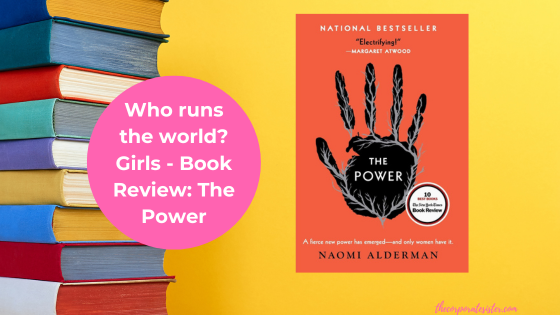
If there were ever a book that transported me to the quintessential alternate feminist stratosphere, it would be The Power. This 2016 novel, and 2023 Oprah Book Club pick, by British author and novelist Naomi Alderman depicts a tale of gender dominance rooted in the power held by women in their bodies. This power gives teenage girls and women the vital force to inflict enormous pain, and even cause death.
What if women ruled the world? This is the initial premise of The Power. More specifically, what if every woman possessed the electric power to rule the world? In Naomi Alderman’s novel, this premise becomes reality as women suddenly develop the peculiar strength to send electrical shocks from their hands. Armed with this new power, girls and women everywhere free themselves from misogyny, abuse and threats of all kinds. As the novel progresses, a literal reversal of power happens, flipping the familiar construct of the patriarchy on its now fragile head. Men are now under the dominance of women, needing a legal female guardian authorizing their whereabouts and not being safe walking down the street. A new world where men experience what too many women have been subjected to for too long…
The Power is built around four main characters, including an abused American foster child guilty of her abusive step-father’s murder, a crime boss’s daughter from London looking to avenge her mother’s death, an ambitious U.S. city mayor and her daughter, and a young Nigerian journalist.
Yet, The Power is more than just about this utopia of female empowerment. Actually, it goes from utopia to dystopia as women begin abusing their newfound might. In the second half of the novel, Alderman paints in wide brush strokes the classic picture of power, its excessive, corruptive and oh so destructive effects on human nature. She asks important, subdued questions about the nature of God, the foundation of faith and the secrets of organized religion. Lastly, and maybe more importantly, The Power leaves us with one powerful suggestion, through the once character of the novel whose identity is never revealed, one who could be the voice of God or that of intuition. It is the suggestion that it was never so much about whether or not women lack power, but rather whether or not they realize their power and use it for good.
At the end of the day, the power was always there. However, power is a mirror, reflecting the depths, breadth and width of the ones who use it.
Picture this…It’s Monday morning, 7am, you’ve already dropped off the kids at the bus stop and sent them off to school, fitting in a quick 10 minute walk with the dog in the process, and thrown a load of laundry in the washer…By 8am, you’ve made your plan for the day, what with colorful highlighting and side notes on your favorite planner, and you’re ready for the first meeting of the day, polished Ann Taylor shirt on top, casual and oh so comfortable elastic pants on the bottom…The thought of not being stuck in morning traffic at least a couple of days a week and dealing with unavoidable work micro-aggressions is making you smile, as you mentally strategize for the week…
If you’re reading this, this may sound like the ideal work-from-home morning…Or if you’re fortunate enough, this may actually be what some, or most of your mornings feel like… The feeling of not having to choose between a well-integrated life that does not require an inordinate amount of running around, overwhelm and burnout….The sense of not having to give up on yourself, your values, your family for the sake of your work, or vice-versa…
For as long as I can remember, this drastic choice between a successful career and a well-integrated life that honors my values and myself as a woman, mother, wife, friend, sister, along with all the other hats we wear as women, has been there…It’s a difficult choice that ends up in a negative loss for all parties involved, mostly for women. Post COVID-19 pandemic, the newfound work flexibility and call to realignment to our values as individuals and women in particular has shaken the dust off of this old, cruel choice…Women are now understanding and claiming their right to own their ambition and lives without the threat of bias, guilt, or burnout…
Workforce trends from the “Great Resignation” , the Great Breakup” and “quiet quitting”, to the recent hype around “lazy girl jobs”, defined as flexible and well-paying jobs allowing for free time as an antidote to the burnout culture affecting many, especially women, have seen people, and women in particular, reevaluate their careers. Yet, despite this, women are far from being “lazy” in their careers. In fact, according to McKinsey&Company’s Women in the Workplace 2023 report, “women are more ambitious than ever, and workplace flexibility is fueling them”. The report reveals 81% of women expressing the desire to be promoted to a higher level, an 11% increase from 2019. A whopping 96% of women declared their careers hold an important place in their lives, in same numbers as their male counterparts. Even yet, 97% of women and men also admit to prioritizing their personal lives while still viewing their careers as important.
What this is suggesting is a new paradigm shift in the way women view their careers and lives. No longer is it a matter of making an excruciating choice between professional success and personal values and life, but rather a matter of re-shuffling the deck of cards to accommodate success in both areas. Thanks to the forced re-examination of our values and systems, as well as the flexibility card reinforced by the advent of the COVID-19 pandemic, among other factors, women are now redefining what success means to them. In fact, they are re-defining what success has always meant to them, but that they were not allowed to implement…
Yet, even in the midst of this re-defining movement, biases and stereotypes against women still persist. Among these, is the assumption that flexible work can be equated with “lazy work”, whereby employees taking advantage of this benefit are somewhat lacking motivation or are lesser performers. This bias also extends in the unequitable rewards and benefits men get from in-person attendance at the office, including interpersonal connections, access to select information, feedback, mentorship and general support. Meanwhile, women working in person at the office are rewarded with the debilitating impact of micro-aggressions as well as the “broken rung” syndrome whereby men benefit from higher level promotions at higher rates than women.
As a result, many, if not most women, are choosing to re-define where they stand in their careers and lives, somewhere between persisting ambition and lazy girl syndrome. Somewhere between aspiring to being all they can be professionally, and yet still prioritizing better work-life integration and keeping burnout, overwhelm and disease at bay…Somewhere where the choice is not between the better of two evils, but where evil is not a choice…
For this to be possible, it also means that companies, organizations, leaders and every single person out there, must get invested in the discussion and fight for:
Understanding and respecting women’s work and life values
Access to greater and fairer flexibility (that does not punish women)
Diversity, Equity and Inclusion programs and initiatives targeting micro-aggressions, as well as promotion and pay inequities
Are you somewhere between ambitious girl and lazy girl?
In this podcast, I discuss the impact of gender on the process of negotiation, and also on the outcomes! If you’ve struggled with negotiation as a working woman and mom, or just have been curious about it, this episode is for you! Some of the research cited in this episode include:
Thanks so much for tuning in and listening to this week’s episode! If you enjoyed this week’s episode, please share it by using the social media at the bottom of this post!
Also, leave me a review for the TCS podcast on Apple Podcasts !