Talking to children about a crisis is extremely challenging, and at times downright heart-wrenching, especially as a parent. With the coronavirus crisis upon us, many working parents are faced with tough questions from their children. As a working mom, you may have been at the end of a string of inquiries from your kids, asking just about everything about this crisis, from why they have to stay home and skip school, to whether people can die of the virus and why.
I know I have, and have felt a painful pinch to my heart and tightness in my chest, as I tried finding the right words to explain the unexplainable. How do you tell young kids from one day to the other, they may not be able for a while to freely roam outside and touch everything in sight, see their grand-parents, cousins and friends, or that they now have to stay home until further notice? How do you use words that make sense, and somehow lighten the weight of the anxiety and frustration you may be experiencing yourself? And how do you talk to children about protecting themselves from the virus, and avoid spreading it around?
In times of crisis, children do worry as well. While they may express it in different terms, or act out about it, they can still sense and experience the stress, fear and anxiety around, especially when coming from their parents and closest loved ones. This is why it’s so important to have honest yet sensitive conversations with children, especially in times of crisis.
Assess what the child already knows and reduce his/her exposure
One thing I’ve learnt as a working mama is that children know much more than we give them credit for, especially now that many have more access to the internet and tech tools. This is all the more important that as children are stuck at home and much of their homework is located online, it’s challenging to reduce their screen time.
Ask them what they already know about the current situation, so you can correct any misconception. Reducing their exposure to news about COVID-19 may also help alleviate any anxiety and risk of misinformation.
Be honest
It may be tempting to embellish the truth to protect our younger ones. However, it’s crucial to be honest and give them accurate information, as long as it remains appropriate for their age and developmental level.
Teach them safety comes first
As part of talking to children about any crisis, including the coronavirus crisis, teaching them safety comes first is paramount. In the case of the coronavirus crisis, teach them about rules of safety, such as keeping a social distance from people, appropriately washing their hands or sneezing and coughing in the trash or into their elbow, among other preventative measures.
Let your behavior serve as a way: stay calm and non-judgmental
Children emulate our behavior more than they listen to what we say, as I’ve learnt at my own expense. That’s why I’m careful to assign blame in my words or actions, or to show too much frustration or anxiety. While we’re human and don’t have to keep our emotions tucked away, serving as a positive example can go a long way.
Kids pick up on adults’ behavioral cues, so staying calm when talking to them in times of crisis is essential. As much as possible, use a reassuring tone, even when conveying less than positive news.
You can find the CDC’s guidelines to talk to children ab by clicking here.
Have you talked to children about the coronavirus, or any other crisis? What additional tips would you add?
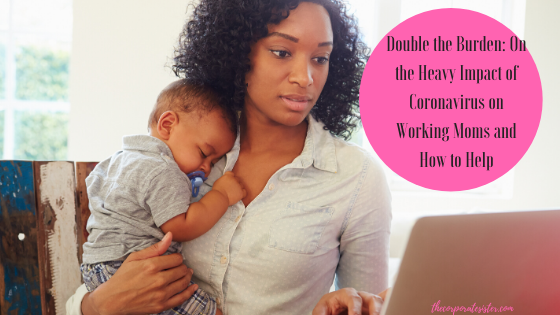
As we navigate the Coronavirus crisis quarantined at home, many working moms are under extraordinary pressure to handle multiple priorities at once, including childcare, elderly care, remote work and household chores, in addition to keeping a level head and maintaining some sense of sanity. While many parents are working from home, the burden of care and household chores still traditionally remains on working moms, who also have to add to it the pressure (and obligation) of working remotely.
For many, if not most working mothers, it means rearranging their schedules to rise even earlier than usual to work, or staying up late to catch up on unfinished business. It also means homeschooling the at least 32.5 million students from kindergarten through 12thgrade, who may be reticent to studying at home, and having the patience to deal with the inevitable meltdowns and tantrums that may come with it. Add to it the piling up of dishes, laundry and household cleaning due to the majority of the family being home at the same time, and overwhelm, frustration and even resentment, may set in. This is without even considering the impact of the anxiety, worry and despair plaguing most of us as we painfully learn to live in a reality that is closer to science-fiction than anything we could have ever imagined…
What this also translates into for working mothers, are inescapable health-related mental costs, as the number of hours spent working inside the home on careers and businesses, in addition to childcare and household-related duties, increases, along with stress and anxiety levels. For working moms who do not have the benefit of salaried employment, are seasonal workers, or small business owners, the economic costs are outrageously high, as many, if not most, come to terms with not being able to put food in the table in a matter of days or weeks. Many working moms, single moms in particular, who relied on schools to provide meals to their children, or moms whose children need regular, expensive medication, are now facing dire economic circumstances.
As a working mom myself, I was shocked by the sheer amount of work, both childcare and household-related, in addition to adapting to working remotely in the midst of chaos and homeschooling, I now had to face. As my spouse had to go to work, this also meant dealing with the new situation alone at home. While I’m certainly counting my blessings, I also realized there are millions of working women faced with the same, if not worse, situation.
I can only imagine what the moms who work part-time performing essential duties that cannot be performed remotely, are going through. Women working part-time represent 2/3 of the population of part-time workers, as reported by the National Women’s Law Center, and are paid less in addition to having less access to benefits. Not to mention the working moms in the healthcare industry, or in other emergency fields like firefighters and public servants, who do not even have the privilege to stay home.
While this depicts a pretty dreary picture during this already depressing coronavirus crisis, it also reminds us of the importance of building plans and infrastructures that preserve working mothers in the regular course of business and life. The House passed a preliminary aid package including a provision to provide mothers and pregnant women out of a job with food.
While there should be contingency plans in place to protect everyone, working moms, most of whom in charge of caring for children and elderly, especially in the case of single moms and in many families represent financial, emotional and spiritual pillars, should not be forgotten.
Here are some ways to help working moms during the coronavirus crisis:
Bosses, please be more understanding!
Working from home with kids is HARD. This is why it’s so important that working moms and their managers have honest conversations about work expectations during this time. This is largely uncharted territory, hence the importance of having flexible yet clear expectations, and being able to adapt to change.
Use technology to help out
With the quarantine restrictions, it may mean children are expected to have more screen time than usual, with homework and activities being completed online. This also means that some working moms may have to get a computer, or not have enough computers for all their children. If you have a spare computer, consider helping out by sharing with less fortunate families.
Some companies have already started offering Internet streaming services for free, which will be a huge relief for families. Other ways to help include using technology to hold virtual play dates, or send tips and tricks to help working moms via text, email, or on social media.
Parenting partners, please get on the same page!
In regular times, sharing responsibilities as parenting partners is challenging, with most of the childcare and household duties falling on working moms’ shoulders. If you’re a parenting partner to a working mom, it may mean considering adjusting your schedule to accommodate school closures, work disruptions, layoffs, and other disruptions bound to happen during this time.
It also may mean opening the lines of communication with your partner to understand what they’re going through, and how best to help, whether it’s operating in shifts, come up with creative alternatives, or just lending a compassionate ear.
Just check in and ask how they’re doing
Sometimes, all someone needs is a smile and a word of encouragement. Many working moms are struggling to keep mentally healthy, in addition to their other preoccupations and worries. Just be kind!
Offer assistance if you can
Can you spare a roll of toilet paper, some extra money, or just resources on funding (state or federal) and (trustworthy) information you can share? Your contribution can make the difference in someone’s day, so if you find yourself in a situation where you can help, consider doing so.
Overall, working moms are some of the hardest hit through the coronavirus case, economically, physically, and mentally. They also are the pillars of many, if not most families, who may not able to survive without them. As such, the burden to help and assist working mothers is on all of us, and the responsibility to help our common duty.
As a working mom, what challenges are you facing during the coronavirus crisis?
Sitting in the waiting room at the dance class studio while my daughter was taking ballet, after arriving rushedly a few minutes late, I looked around at all the other parents around me. Most of them were moms, and most of them, were looking slightly, or very…tired. It was 6pm, the class went until 7pm, which means for many, if not most of us, we were grappling with the thought of picking some quick food on way home, or trying to desperately remember if there were any leftovers in the fridge. And yes, most of us probably do this more than once a week, in addition to handling the household load and professional obligations…’Tis the era of the successful, glass-ceiling, concrete-wall breaking, but oh so tired working Supermom!
I was raised by a single working mom, so from a very early age, I already was all too-well acquainted with the challenges of what I would always think of as “complicated motherhood”. The kind that requires one to be a mom and a dad, to work and clean the house and cook the meals and balance the checkbook…Yet, even for non-single working moms, when you fast-forward to the present times of “leaning in” and “sitting at the table”, you quickly realize that in some way modern moms have also signed up for “complicated motherhood”, the SuperMom kind. Except after dropping off the kids to school, commuting to work, holding her own at work, picking up the kids, driving to extra-curricular activities, figuring out dinner, bedtime, and everything in between, SuperMom gets seriously tired…
The amount of obligations and requirements the popular modern definition of success for working moms has heaped on our plates is astounding. What’s even more astounding, is that we still bravely, fiercely, and sometimes unconsciously, strive to check in all the boxes, satisfy all the requirements, and play all the parts we’ve been assigned and have assigned ourselves as well. That’s how our SuperMom capes get so heavy, as they fill up with social activities, personal and professional responsibilities, and worse of all, the ever-looming sense that as our to-do lists get longer and less effective as ever, we are not enough. And in turn, we teach our daughters and our sons to have the same unrealistic and destructive expectations we, and the rest of the world, throw at ourselves.
In the modern era of the working mom who can have it all, it may be high time to opt for having all that matters instead, and ditch our super-sheroes capes in favor of our fulfillment, purpose and sanity:
Assess what’s truly IMPORTANT and IN ALIGNMENT with you and your family:
When you’re a working mom, everything seems important, from the kids’ lunch menu form to the meeting at work. It’s as if we had this “IMPORTANT” basket right on top of our heads, day in and day out, that we desperately try to keep in balance at all times. We’re trying to devise the dinner menu while on the conference call, checking the time to make sure we’re not late for after-school pickup and the kids’ dance and soccer practice. Too much!
What is truly IMPORTANT to you and your family? What are those non-negotiables you need to agree on with your partner and your children? After hectic months of running around in sheer exhaustion between work, home and school, we had to have those important conversations in our household. Without agreement, alignment, and a sense that we’re all in alignment with our current purpose and goals, it doesn’t work…
Recognize your limitations
Moms are powerful. Like everyone else, they also have limitations. It’s called being human, which also means making it to the 8am meeting after dropping off the kids probably won’t leave room to wash all the dishes in the sink. Or that not having a minute to yourself as you try to climb the corporate ladder will not let you enjoy family time.
Admitting that in each season of your life and work, you will have limitations, is key. Not as an admission of guilt, or a sign you’re giving up, but as a gentle reminder slowing down is a blessing. What are the limitations you know you’re facing? Where can you cut down on time and effort? What can you take off your plate?
Be more present
The problem with overachieving is the more you try to fit into your busy schedule, the less you’re able to be present for it all, mentally, physically and spiritually. Are you barely listening to the kids as you’re trying to make dinner and be on the conference call all at once? Do you notice your temper getting shorter by the second as you try to do three things at once? It may be time to invest in less busyness and more actual presence…
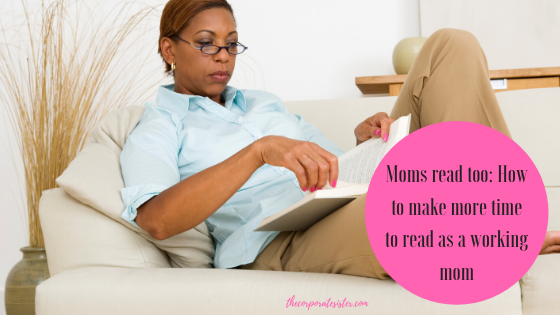
I remember the feeling of being engrossed in a book for hours, enjoying every single sentence, treasuring every single word as I l crouched hidden as a child in my closet with a candle on to finish (or start) a book. If you are a book lover and bookworm like myself, you know the feeling. And then life happened, kids happened, pick-ups and drop-offs along with work schedules and the whole “adulting” thing, took over. Gradually, as a working mom, I was barely getting to one page a day, then a week, then the babies started ripping pages off my favorite books, when these would not accidentally slip in the toilet as I struggled to hide in the bathroom to sneak some personal mama time. Before I knew it, I had almost given up on books as a source of learning and as pure, unadulterated joy, for lack of time to read.
Reading has been proven to have a plethora of benefits, from mental stimulation that can slow the progress of dementia and Alzheimer’s, to reducing stress, increasing knowledge and vocabulary, to improving memory, concentration and focus, to cite a few. Many of the most successful and influential individuals, from Oprah to Bill Gates, credit reading for much of their inspiration and achievements. For me, it’s always been a source of escape, and my favorite way to learn about anything. As a student, it has allowed me to grasp the most complex concepts. As a working woman, it’s been my saving grace to acquire the skills I needed, and as a writer and teacher, the fuel to my inspiration and the essence of my life’s work.
Giving up on it as the pressures of life, parenting and work accumulated felt like an unfair punishment, in addition to a blatant disadvantage as a working woman and mom. The more intentional I decided to be about how I spent my time and what to say yes to, the more it became crucial to re-establish reading as a part of my schedule. Here are some ways that helped me do so, and that may help you as well as you make more time to enjoy the pleasures and benefits of reading:
Make reading a part of your sacred time
When I started re-prioritizing my time and how I spent it, I began to re-classify some of what I call my pillar activities as my sacred time. These include my prayer and worship, meditation, family, exercise and reading time, as my sacred time. By sacred, I mean non-negotiable, at all. For me, it means reading for 30 minutes a day at the very least, usually early in the morning or at bedtime. It also means letting go of non-sacred activities, such as browsing social media, or watching TV, in order to fit some yummy book-reading in. At the end of the day, it’s all a matter of priorities.
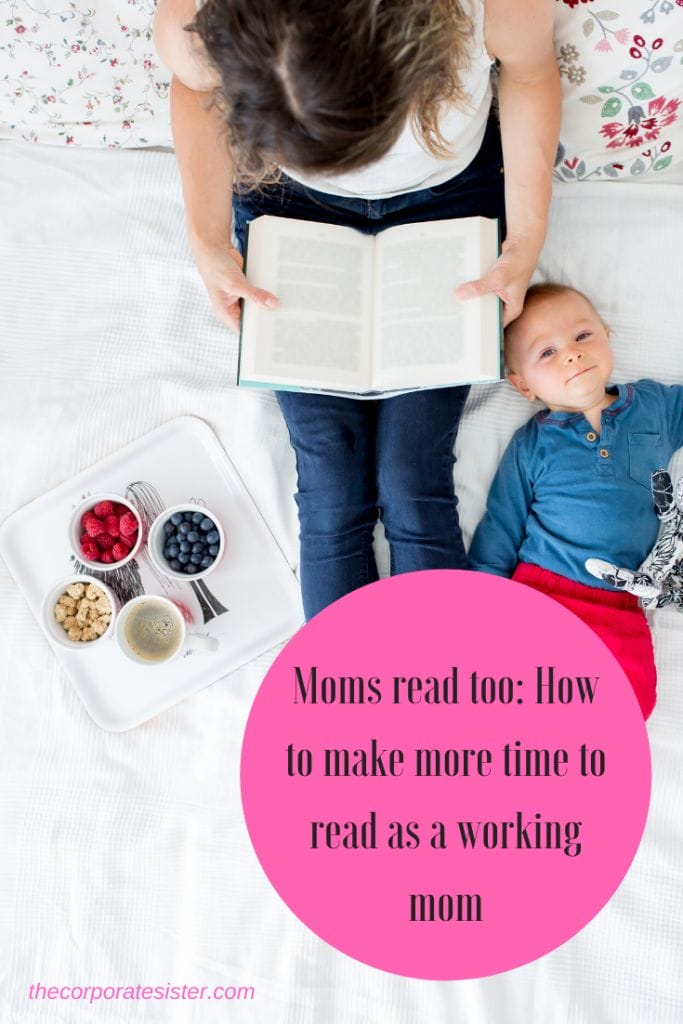
One effective way to make more time for reading is to make it a family activity. I love public libraries, and as a new mom on maternity leave, I would often sit at the local library for hours with the babies reading while they would play or nap. It later turned into a regular family activity, which also instilled in my kids a love for reading. As they carve out their own time to read, I also now take it as an opportunity to enjoy a good book myself. And voila, it works for everyone!
Consider technology as a way of reading too
I recently started listening to audiobooks and to my surprise, I really enjoy listening in on a good book on my long commutes to work and school. It’s another way I found to get some reading in, especially when driving, doing laundry or cleaning the house. Granted, I still prefer my good old paper books (blame it on habit), especially when it comes to fiction books. I find it easier to listen to a non-fiction, practical book than a fictional account, but it’s mostly personal preference.
If you’ve been considering giving up on reading, or have been struggling to fit it in as part of your schedule, I hope these suggestions motivate and inspire you to continue to invest in yourself through books.
How will you make more time to read as a working mom?
As busy and at times overwhelmed working moms, thinking further than the next drop-off or pickup, the next meal, or the next school form to fill out can be far-fetched. We’re so often caught with the demands of the moment that long-term planning can fall by the wayside. Especially when this long-term planning involves uncomfortable, and downright somber possibilities such as the case in which something should happen to us, and we could no longer be around our families and children. This falls under the definition of estate planning, which while sounding like a dark topic, is also one that working moms like you and I should get familiar with, and take action on.
According to Investopedia, estate planning is the “preparation of tasks that serve to manage an individual’s asset base in the event of their incapacitation or death.” This includes the guardianship of any living dependents, such as children, naming beneficiaries of insurance and retirement plans, naming executors and power of attorney to oversee and direct assets in the process, and many more planning tasks.
I remember meeting with my first financial advisor, and broaching the topic of estate planning. Saying it was a highly uncomfortable conversation is nothing short of an understatement. The prospect of anything happening to any of us is a rather terrifying one, let alone having to plan for it. However, life happens, circumstances are often out of our control, and may end up leaving our loved ones in dire straits for lack of adequate planning and preparation. This is actually what happens to 70% of Americans who leave this Earth without a will.
As working moms, it’s also our responsibility to help plan for the future and well-being of our children and families. If this is something you have thought about and would consider, here are a few steps to help us get started:
Introduce and continue the conversation
This is hard to think about, let alone talk about, so it is understandable that you may feel awkward and even stressed broaching the topic. However, keeping in mind the well-being of your family can help in the process, and you can start with your spouse, significant other, or a trusted loved one. It need not be an elaborate discussion, but rather the honest asking of questions such as: “Who would take care of the kids if anything happened to me/us?”, or “What would happen if I fell ill?”, or “How will things and assets be divided up in case of unplanned circumstances?”
This also means continuing the conversation with the people you and your partner, or you on your own, if you happen to be single, have picked to fulfill various roles as part of your estate planning. These may be your potential executors, children’s guardians, or individuals to be entrusted with power of attorney. It would make sense to first discuss with them the possibility of their fulfilling these roles, and whether or not they agree to do so and are aware of what it entails.
Begin the process
The most immediate basics that most people start with when it comes to estate planning consist in setting up a will and establishing life insurance. Many have life insurance already set up from their workplaces, however it is important to check whether those insurances do indeed cover all foreseeable needs should something happen. This is especially relevant if your family is dependent on your income.
As for a will, it can be easily done online, although you may want to check with a professional as well, and consider a “living will” as your healthcare directive for your medical and financial wishes.
Also be sure to consolidate all your paperwork and documentation, and inform your executor(s) of their location and how to access these, should anything happen.
Seek professional help
If you’re afraid you may not be familiar enough with this process to undertake it alone, or your estate is larger or more complex than average, or if you possess investments, you may want to seek professional advice.
Despite the fees charged by attorneys (which may range from $500 to multiple thousands of dollars), setting up your estate plan appropriately will save you not just money, but your dependents much heartache and stress in the long run. Besides, peace of mind is worth every penny!
Have you thought about estate planning as a working mom?
As working women and moms, the reality is we often neglect our mental health. Faced with all the responsibilities and duties imposed (and self-imposed as well) on us, we tend to put this part of self-care on the back burner a lot. This is especially relevant when we consider the dark stigma around mental health and therapy, especially in minority communities. I grew up in Senegal, West Africa, where the entire concept of mental health was (and in many ways still is) ignored altogether.
Back then, we didn’t talk about mental disease, only pitying the “crazy” men and women abandoned on the streets for lack of better care. Despite the existence of mental health hospitals, there was a strong stigma on mental health, or the lack thereof. As a result, for me, the necessity of caring for one’s mental health was non-existent. You just had to cope with whatever came your way in life, and that was that…
It wasn’t until later in life, after experiencing the heart-wrenching blow of suicide, loss and grief, that I started wondering about mental health. As an immigrant in a different culture that was more open to considering the importance of mental health and therapy, I had the opportunity to learn more about it. First, from books, then through conversations, and ultimately through experiencing the benefits of therapy myself at a turning point in my life and work.
Like many, I felt the stigma and the associated sense of shame around it initially, especially as a strong Black woman who was taught to “handle my business privately”. Yet, what I learnt about myself, my beliefs, values and story, and the deep process of healing and freedom that ensued, absolutely amazed me, and prompted me to share my experience with fellow women and moms:
Going to therapy is an act of bravery and NOT weakness
One of the main reasons why so many women, and people in general, avoid therapy (or any form of mental health care) is because of the stigma of weakness associated with it. For many, to go to therapy means admitting to being weak, to not being able to cope with life, or being unable to “handle your business”.
As a result, the rate of suicides and depression have been climbing at an alarming rate, as individuals are left to struggle alone. On the very contrary, taking care of one’s mind is an act of courage, an act of bravery that says: “I want to be whole, so I can in turn help others be whole”.
Your mind is your most important asset, and you should care for it
The most important asset we have is our mind. It’s the battleground where our thoughts define the way we see, and act towards, the world. It can literally make or break us. So why wouldn’t we, especially as women and moms who are in charge of so much of the world’s education through our influence on families and children, care for it as well as we do our bodies?
Imagine dealing with everything you deal with as a working woman and mom, and not stopping to wonder if you’re ok mentally? It’s with our minds that we raise our children, follow purpose, help others, build striving lives and careers, and they deserve the best care.
Your growth and healing affect others
We all carry baggage from our pasts and present. From childhood on, we are shaped by beliefs and values transmitted to us by well-meaning parents, family members and communities who themselves carried negative baggage from their own experiences. As such, we’re not always responsible for the cards we’re handed in life. Yet, what we are responsible for is our own healing and growth as individuals. Without it, we run the risk of stagnating and not evolving ourselves, not to mention bleeding on and hurting others who may not be able to defend themselves, including our children.
As moms especially, our mental health deeply affects our children, and we are the ones instilling many of the values and beliefs they keep for most of their lives. It also affects our marriages, couples (hence the importance of couple therapy as well) and relationships. That is a heavy responsibility that we must be aware of and heed carefully.
All in all, caring for your mental health as a working mom is far from being an indulgence. It’s actually a necessity that doesn’t just impact you, but whose benefits extend to everyone and everything around you. However, it requires courage, commitment and the willingness to preserve one’s mental well-being.
Have you been considering your mental health and ways to better care for it?
When you hear this phrase, you may picture someone at their desk, holding their cup of coffee, seemingly pumped at the prospect of a productive day ahead. Right? Well, not exactly for everyone, and certainly not for working moms…
By the time many, if not most working moms reach their place of employment, they would have been up for at least two hours, busying themselves to get the kids ready, lunches prepared, and other logistical details all set. This is before frantically jumping in the shower, swiping on a bit of lipstick while doing the kids’ hair, and rushing out the door to fight traffic and beat the clock for kids’ drop-off. Then, only then, do they finally get to make it to what I lovingly call our “second shift”, where we now are expected to conduct business as usual, as if we didn’t just wage a full-on war on time, roadways and the sheer meaning of life itself. The best part is that these same working moms get to do it all over again, in reverse this time, at the end of the day, braving questioning bosses, delays, and exhaustion to pick up tired kids, only to head to more work at home. And it starts all over the next day again…Are you tired reading this yet? I know I am…
As a working mom, like so many others, this is my life. When I consider the ordeal that some of my fellow sisters find themselves in, just to keep their family and work afloat, I consider myself lucky. One of my readers posted earlier today that she has to bring her kid in to work every day, before dropping her off in time increments, so as to be able to put in some hours at the office. One of my friends had to go part-time entirely, while another was forced to make the heart-wrenching decision to give up on the job of a lifetime. And there are so many other similar stories of working moms out there, whose unpaid labor is so costly, yet is not being acknowledged, appreciated or recorded for that matter.
In her book “Invisible Women: Data bias in a world designed for men”, author Caroline Criado Perez illustrates the real cost of unpaid labor for women, brought on by a society historically built for men and as such without women’s input, with staggering statistics that brought tears to my eyes and indignation to my heart. Not only is this unpaid labor, from childcare to elder care and household chores, literally killing women, it’s also destroying our economy. Studies have shown that if the cost of unpaid labor for women were properly accounted for, it would positively affect the GDP of many a country in amazingly positive ways. Most importantly, it would allow for better physical and social infrastructures for women, which in turn would create more opportunities for the latter to be more productive thus improving the performance of businesses and the economy as a whole. Can you talk about a ripple effect?
As working moms, this catastrophic, and worsening, unpaid labor, translates into high costs we should all be aware of, if we want to begin to turn the tide around:
Unpaid Labor for women means lost wages and a rising wage gap
Having to take care of children or elderly parents, which is often women and moms’ burden, translates into women having to decrease their working hours or leave their jobs altogether. This also means lost wages for these working women and moms, which in turn widens the wage gap in general. According to a recent Organization for Economic Cooperation and Development (OECD) December 2014 survey, the gender pay gap is noted to be higher in countries where women spend more time on unpaid labor.
Unpaid labor for working moms means declining physical health
Women in general work more than 40 hours a week, which takes a toll on their physical health. Although women tend to live longer, they tend to be sicker than men towards the end of their lives, which puts into question the number of hours working women and moms put into both paid and unpaid labor. A 2011 study published in Psychological Medicine reports that working more than 50 hours translates in heightened risks of anxiety and depression for women. Moreover, a 2016 U.S. study published in the Journal of Occupational and Environmental Medicine found that women’s hospitalization and mortality rates increase with longer work hours.
Lastly, unpaid labor for women means lost time
How many hours would working women and moms gain if they could only recoup some of the precious time they spend on household chores, childcare and elderly care? This lost time can amount to days, weeks, months, and even years in the long run for women, creating a massive loss of time. Additionally, working women end up in occupations below their skill level in order to get the flexibility they need to carry out their unpaid care work, which also lengthens the time women spend progressing in their careers.
All in all, unpaid labor stands as a major obstacle for working women and moms. Ultimately, we have to be aware of it so as to make others aware of it, in order to turn this unfair share into a more equitable one.