When we think about building a great career, fulfillment and authenticity are usually not the first things that come to mind. I remember while growing up overhearing adults around me talk about what makes a great career. What I heard, and what stayed with me for the longest time, was that a desirable career was all about prestige, perks and of course, lots of money. And if you know African parents, it almost always meant you had to become a doctor or an engineer…What I didn’t hear was anything about building a fulfilling and authentic career on purpose. On the very contrary, it almost seemed you had to become someone else, someone different than who you were, in order to build the career of your dreams…
Like so many other working women and moms, I took with me the various pieces of well-intended career advice I was given while growing up, as I was starting to build my own career. As I was told, I looked for places of prestige, perks, and well…money. It wasn’t until years later, when disruption hit my life and the virulent itch of disruption and change took over, that I started questioning myself about what “having a great career” really means.
That’s when I began battling the call of my purpose with that of a well-padded paycheck…
When I began wondering if having to choose between my family and my work was really sustainable…
When I became clearer about the life and career I wanted to build for myself, my family and my community…
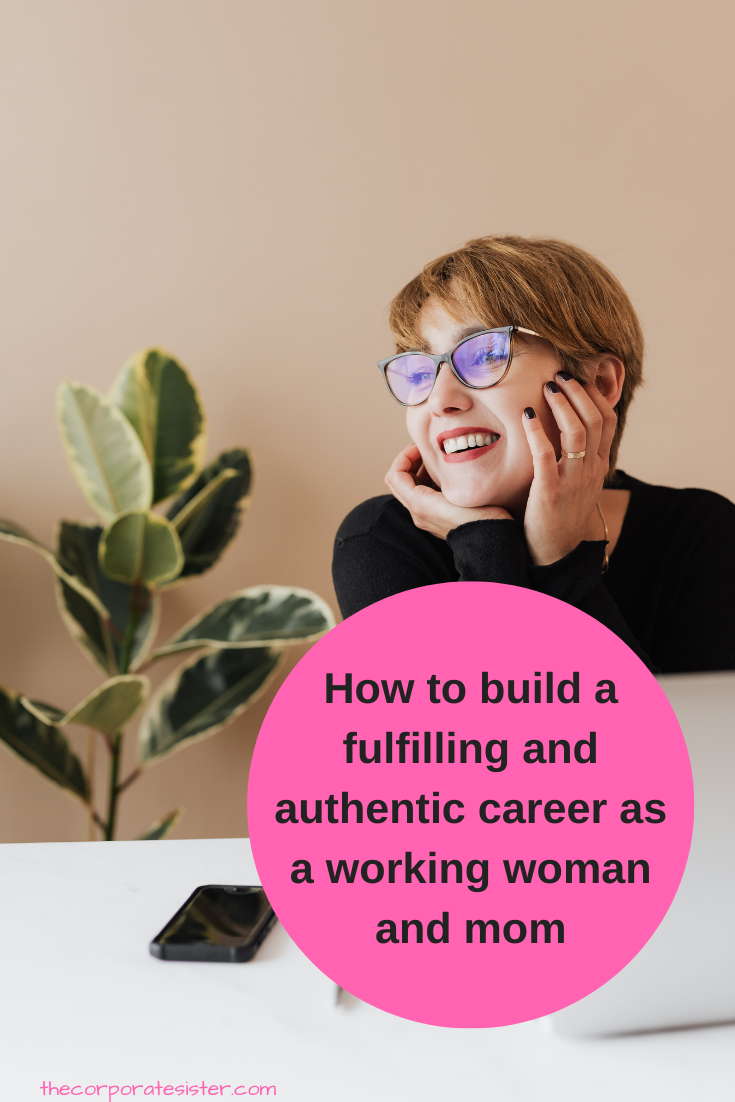
It’s also when I started wondering about what it means to build a fulfilling and authentic career as a working woman and mother…
As working women and moms, many, if not most of us, care about building a fulfilling and authentic life and career. A recent 2021 Gallup study shows while better compensation and work-life balance appear to be top priorities for both men and women, women rank factors such as work-life balance, the ability “to do what they do best”, and greater diversity and inclusion as most important. This is especially relevant after the COVID pandemic as women have been getting back to work more slowly than their male counterparts, as a result of lack of flexibility and caregiving support. Generally, employees all over the world are seeking more purpose and personal value in their careers nowadays, especially after the pandemic. More and more employees are engaging not only in what has been dubbed as the “Great Resignation” or this massive movement of employees out of the workplace in search of greater life and work meaning; but also in a process of “Great Reflection”, reconsidering what matters most to them in life and at work.
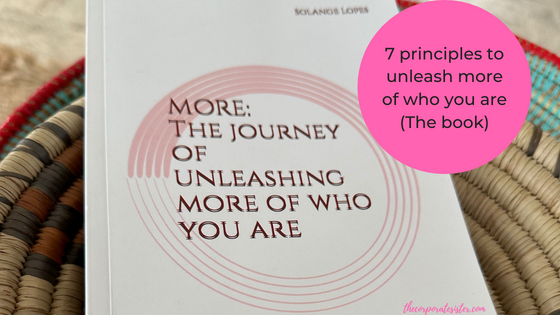
So how do we go about building more fulfilling and authentic careers as working women and moms already faced with so many constraints, biases and opposition in and outside of the workplace? How do we manage to work in more authentic and more fulfilling ways? Here are three tips from my own experience changing careers towards more authenticity and fulfillment of my purpose, which I discuss in my latest book “More: The Journey of Unleashing More of Who You Are”:
Awareness is key: Know who you are in each season
In order to build an authentic career, you’ve got to know who you are! As easy as it may seem, it’s actually the task of a lifetime to figure out who you are and who you keep evolving into, as each season of life is different. As a working woman and mom, it’s an even more daunting task to sift through all the clutter of societal and cultural gender conditioning and biases to uncover who you really are and what you really want out of your life and work in this current season. This is why developing consistent habits of awareness and mindfulness, and making a regular practice of checking in with yourself are so important!
Allow for disruptions and change
Crafting an ideal career aligned with who you are and your purpose also means taking the less-traveled road, often the one filled with uncomfortable disruptions and changes. As such, building a fulfilling and authentic career, and life in general, especially as a working woman and mom, is also about answering the call of change when it knocks on the doors of our comfortable lives, and being willing to be uncomfortable in order to accomplish our purpose. Paradoxically enough, it’s this very discomfort that allows us to grow into the most fulfilled, authentic and purposeful versions of ourselves.
Start where you are and use what you have!
Last but not least, starting where you are and using what you have is how you set the foundation of a more fulfilling career. This also means leveraging all your experiences, wins, setbacks and everything in between, from being a mother to failing in your latest work or business project.
All in all, building fulfilling and authentic careers as working women and moms is about being aware of who we are, allowing for disruptions and changes, and starting where we are and with what we have. While the process may be unpleasant at times, it’s what ends up leading us to crafting the work of our lives, on purpose.
Are you ready to build a fulfilling and authentic career as a working woman and mom?
Have you ever said to yourself, whether it was as related to a life or work situation, there’s got to be MORE? Have you ever been so sick and tired of being sick and tired of the status quo in your workplace and wondered if there is more to your career? Have you been stuck in your business to the point of wondering if there is more to being an entrepreneur?
I suspect most of us have, especially as working women and mothers with so much on our plates day in and day out. Especially as the blatant lack of infrastructure supporting working women and moms often leaves us depleted…Especially as the various and oh so unfair biases affecting us, from gender stereotypes to the glass ceiling and concrete wall, leave us wanting for more fullness in our careers and businesses… These are also some of the issues I’m grappling with in my new book “More: The Journey to Unleash More of Who You Are”.
How can, and do we unleash more of who we are as working women and moms despite the obstacles facing us in and outside of work? There are 7 principles I discuss in the book as part of the conversation to answer this question:
Principle 1: Don’t miss your wake-up call wrapped as disruption
Unleashing more of who you are and what you want out of your career and life often requires you to step out of the very routine that is keeping you stuck. This often comes wrapped as unwelcome disruption at the seemingly most inconvenient times. Learning to recognize the wake-up calls wrapped as disruption is key to beginning and continuing the journey of unleashing more of who you are.
Principle 2: Begin with what you have and where you are
What keeps most of us stuck is the inability to even know where to begin in order to embark on a new journey. One of my favorite inspirational set of phrases from tennis legend Arthur Ashe is “Start where you are. Use what you have. Do what you can.” To me, it speaks to the power of small change and consistent, resilient progress. In this sense, harnessing the incredible power of your unique individual stories, skills, talents, quirks, and everything that makes you YOU becomes your very unique greatness proposition and best competitive advantage.
Principle 3: Use your season of preparation through experience and release
In line with beginning where you are and using what you have, harnessing your past experience and re-purposing your skills, talents, and story is also key to unleashing your own MORE. This also requires letting go of the version of you that no longer exists to welcome the new, evolved version of who you are becoming. This is your season of preparation.
Principle 4: Managing progress
There’s a mindset to progress and growth. One that must stand strong in the face of the backlash women experience as they dare to rise. One that must learn to celebrate progress rather than shrink and hide. Ultimately, one that knows how to manage the ebb and flow of growth and evolution while still moving forward. This mindset is indispensable to managing the progress and growth that thankfully and inevitably come as you unleash MORE of who you are.
Principle 5: Handling your season of promotion
The very promotion you may yearn for may also be terrifying to you, as it is to many, if not most working women and mothers. While being aspired to and celebrated, women’s success is also threatening to the status quo, and often rewarded by harsh backlash. This is where dealing with the fear of success and re-defining success on your own terms can make a world of difference.
Principle 6: Daring to celebrate
For working women and moms, joy and celebration constitute resistance at each step of the process of becoming their best selves. Daring to celebrate, while cultivating and preserving your joy is an act of sheer resistance.
Principle 7: Focusing on the process, not the destination
Last but not least, focusing on the process and not the destination through continuous improvement is essential. At the end of the day, it’s a marathon and not a race.
All in all, unleashing more of who you are as you get closer and closer to the fullness of who you were created to be, is a gift often wrapped in disruption and requiring a challenging, albeit rewarding, process of growth and evolution. This is a necessary and brave journey of un-becoming much of the negative and damaging stereotypes women were taught and socialized into, and instead becoming all you were meant to be.
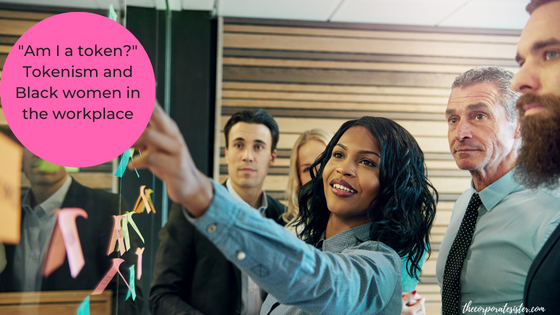
This is a question that many Black women, and women of color in general, ask themselves in the workplace. A rather difficult one that may awake some of the most primal fears in them, from the fear of not belonging to that of not having much value…
The Merriam-Webster dictionary defines tokenism as “the policy or practice of making only a symbolic effort”. It’s further defined in the Cambridge dictionary as “something that a person or organization does that seems to support or help a group of people who are treated unfairly in society”. “Tokenism” as a concept has been used for a long time and quite widely to explain, and somehow justify, the barriers women face in traditionally male occupations. However, research shows African-American women tend to experience less satisfying social relationships, less supportive colleagues, and higher levels of stress when faced with instances of tokenism.
Tokenism can take many forms in the workplace, from hiring minorities to fill diversity quotas, to asking a minority to represent or speak on behalf of an entire group or race. The impact of tokenism is certainly multiple-fold for Black women and women of color in the workplace. From feelings of guilt and inadequacy, to over-extending oneself, not to mention feeling demoralized as a result, its consequences are painful and far-reaching. Tokenism also deeply affects one’s mental health as it may lead to isolation, stereotyping and increased pressure on those who are being its objects. As a result, it may also be conducive to mental illnesses such as depression or burnout.
Yet, this “token” impact can also be viewed from a different lens, one that may offer Black women, and women in general as well as minorities, something akin to a competitive advantage. A study co-authored by Harvard Business School’s Assistant Professor of Business Administration Edward Chang shows women and Black professionals being more likely to choose predominantly male or Caucasian teams as long as it would allow them to stand out from the competition, even if it means being a “token”. Despite the painful consequences of it, including isolation, high pressure, as well as mental and emotional pressure, members of under-represented groups may be willing to put themselves at risk in order to advance professionally.
“Am I a token?”
A difficult question to ask oneself for anyone in and outside of the workplace. For Black women at work, one that may prompt inner turmoil, hurt and mental anguish, yet one that may very well be the reality, even when hiding under layers of positive diversity and inclusion messages and initiatives. It’s also a reality that may be used as a competitive advantage to forge one’s advancement in the workplace. Two sides of the same harsh yet very real coin…
Overall, tokenism opens the door to difficult questions, and even more challenging answers for Black women, and women of color in general in the workplace. There is no good answer when it comes to even questioning being a token at work. However, it’s also an opportunity to face the lack of diversity, inclusion and equity plaguing too many institutions, companies and workplaces, and challenge the status quo.
“Am I a token?”
It is a hard question to ask of oneself and others. Yet, it’s one that should bring about increased accountability on everyone’s part. It’s a question that should be followed by other questions such as:
“Why am I the only Black woman or minority in the room?”
“How can we work together to bring in and retain more minorities?”
“What do diversity, equity and inclusion really mean in terms of values in our organizations?”
“How can we begin and continue the work of changing minds, attitudes and actions towards race and gender relations at work?”
If you’ve ever thought of taking control of your finances as a working woman and mom, Suze Orman’s “Women and Money” book is a must-read. This revised and improved edition from her 2007 original masterpiece certainly does not disappoint when it comes to establishing, or re-establishing for that matter, a healthy relationship with your money. I know it certainly helped me…
I’ve had the earlier version of this book on my shelf for many years, and have only recently decided to dig into it, especially when starting the new year. As my word for the year is “consistency”, I resolved to apply more consistency to all the areas of my life, including my finances. When I noted this “oldie but goodie” book had been recently revised and edited, I couldn’t help but order it. What I discovered as I perused its pages in just a few days was nothing short of a financial eye opener…
As a working woman and mom, with training in accounting at that, I’ve always known, in theory, how important it is to have a good handle on your money. As much as I could, I practiced applying sensible rules to managing my money, from budgeting to saving and even dabbling intoinvesting. What I didn’t do as much of, is to take some time to pause and reflect on my relationship, past, present and future, with money. And this is exactly what this book made me do…
In the book, Suze, who in my head I picture as my financial big sis, first starts by discussing how we have been relating to money as women since the dawn of times. She accurately points to the fact that so many of us, even as educated and professionally successful as we may be, seem to experience an inner resistance to dealing with our own money. This ties back to the fact that for the longest time, women have been conditioned to defer money matters to the male figures around them, from parental figures to spouses. As a result, there has been a dissociation between women’s mindsets and money.
Reading this, and even though I was raised by a single mom, I could identify with this inner resistance, this sense that even as an educated, ambitious woman, I tend to experience a lack of closeness to and clarity about my money. The more I turned the pages of this book, the more I could relate my own experience with money to the fear that many, if not most of us, experience when it comes to being free and decisive about our personal and financial futures. Instead, we often end up treating our money as we treat ourselves, with the same fear to displease others, the same fear to not belong or fit in, or that to be rejected…It’s also the same fear that prompts us to not ask for a raise at work, sell our services for less than they’re worth, and allow our significant others to mismanage and abuse our own money… It’s the same fear that basically, as Suze puts it, prompts us to put “ourselves for sale”…
Confirming that, like so many women, I need to take a good look at my relationship with money, opened my eyes, especially as a woman in my 40’s. What this book also allowed me to realize is how important it is to use time and knowledge to our advantage to build a secure financial, and ultimately, personal future. Tips such as living below our means in order to boost our retirement savings, investing in life insurance, preparing to support kids in college through 529 plans, and setting up key documents such as wills and revocable trusts, are a much-needed wake-up call for all women and mothers. The importance of planning our financial futures early, not only for ourselves, but most importantly for our loved ones, is often ignored at the expense of pleasing others and surviving. What we often do not realize is that not taking care of our financial health does not only impact us, but our families and communities in the long run.
Overall, this is a book I highly recommend and consider a must-read for all women. More than financial tips, it urges us to revisit our relationship with ourselves and money, and set ourselves and loved ones for success. If anything, taking care of our money is a gift to ourselves and others around us.
Motherhood is beautiful. Yet, for many working mothers, especially in the US, especially in the past few years peppered with global pandemics, political and economic woes, motherhood has been “hard”. Hard is not often a word that we want to associate with being a mother, at least not one we dare to speak out loud when it comes to mothering. Yet, it certainly is the reality for many, one we soften with cute Instagram videos and funny stories, but a reality nevertheless. As many women after the COVID pandemic especially are turning to a “softer” approach to life and work, they’re also turning to a “softer” kind of motherhood. One that seeks to relieve the pressures of modern motherhood, allowing women to mother more lightly, more happily, more authentically…
I remember having a conversation with a fellow mom at my kids’ school. She laughingly was recounting how one of her daughters had told her on the ride to school one morning, that she did not want to be a mother when she’d grow up. When asked why, the young girl responded: “ Because it is so hard…” That made me think about all the times my own children may have thought the same thing. All the times our kids, nieces, or nephews look at us , between drop-offs, pick-ups, after-school activities and overflowing laundry baskets, and vow not to have children of their own, because…it looks so hard. And this is considering that most of us make it look easier than it actually is…
Many women are hitting walls of exhaustion and burnout, and bravely acknowledging it, as New Zealand’s ex-prime minister Jacinda Ardern did by stepping down earlier this year. As they do so, they are also sending the signal that things cannot keep going as they have been. Even as the world needs increased gender equity, diversity and inclusion, what it doesn’t need are mothers too exhausted to fulfill their potential in and outside of the home. Yet, with companies reneging on work-life balance measures and slowing down their diversity efforts, this is also signaling an urgent need to step back, stop glorifying the “hard” path to working motherhood, and instead re-imagining a softer way.
Often, when we hear of taking a “softer” approach, we may be tempted to think the latter would be less effective. In a society focused on over-performance at the expense of effectiveness, we’ve unfortunately come to equate “hard” with “effective”, or even “worthy”. Yet, the opposite couldn’t be truer. When it comes to motherhood, “hard” erodes the foundation of healthy mothering. Hard motherhood is motherhood that lacks flexibility, motherhood that barely survives rather than thrives, motherhood that is not full or complete, but only a shadow of its true potential. When mothers are submitted to unbearable pressure to perform, produce and deliver in the midst of a blatant lack of social, economic and political support, they are not set up for purpose, fulfillment or success. On the very contrary, they are set up for failure. And when mothers are set up for failure, families, communities and entire societies are set up for failure.
So what are we to do when ditching hard motherhood for softer mothering? In our modern society focused on productivity and results, it’s a tall order. Yet, it’s a change that can occur gradually starting with a few underrated, yet oh so effective principles:
Changing our minds about what it means to be a working mother
It all starts with mindset. For many, if not most working moms, motherhood has become an endless performance. From the wee hours of morning, to late night, they’re performing and giving of themselves without so much as a respite. The tiredness, the exhaustion, even the resentment have become a badge of honor, and the source of many acclaimed social media memes. If you’re a working mom, you must be tired. If you’re a working mom, you must not have time for self-care. If you’re a working mom, you must deny yourself, day in and day out. I remember an acquaintance telling me when my kids were still babies, that I did not look like a working mom because I was too well-put together. So does looking disheveled and piling on the under-eye concealers otherwise qualify us to be valid, worthy working mothers? Nope.
This journey towards softer motherhood begins with a changedmindset around what it means to be a working mom. It means redefining working motherhood in terms of better work-life integration, increased fulfillment and purpose. No, we don’t have to look like we’re on the brink of burnout to be approved as good mothers.
Reframe our careers and lives
The next step is to reframe our careers and lives around this mindset of fulfillment, purpose and fullness on our own terms. What are our non-negotiables? How do we take better care of ourselves in order to take better care of others? What can we take off of our plates rather than adding in? Where, and how can we get the support we need? These are a few questions to begin and continue the conversation.
Reframing our careers and lives is a matter of re-envisioning what a sustainable schedule looks like, from work obligations to kids’ activities. It is creating margins and boundaries in otherwise impossible timetables. Sometimes, it may be a matter of getting rid of the entire timetable altogether.
Taking back our power
Last but not least, softer mothering is about taking back our power to live fuller, more authentic lives that do not reflect a fraction of our potential, but as close to its entirety as possible. It’s about reclaiming the time that is so freely given away and under-estimated, and requesting the infrastructures and support needed, whether it’s childcare, flexibility or equity in the home. Finally, it’s about getting rid of the creeping, generational, overwhelming fear that keeps us from prioritizing our needs, and regaining the confidence to be the mothers we were created to be.
At the end of the day, motherhood was not supposed to be hard. Not this kind of societally-imposed, articificially-made “hard”. Is it bound to be challenging? Yes. Is it supposed to be easy? No. But this hard shell of modern motherhood that seems to be offered on the platter of “having (and doing) it all”, is not it. Rather, re-imagining a softer, effective, and sustainable approach to modern mothering is a better path to creating and sustaining societies that can thrive, and not just survive.